
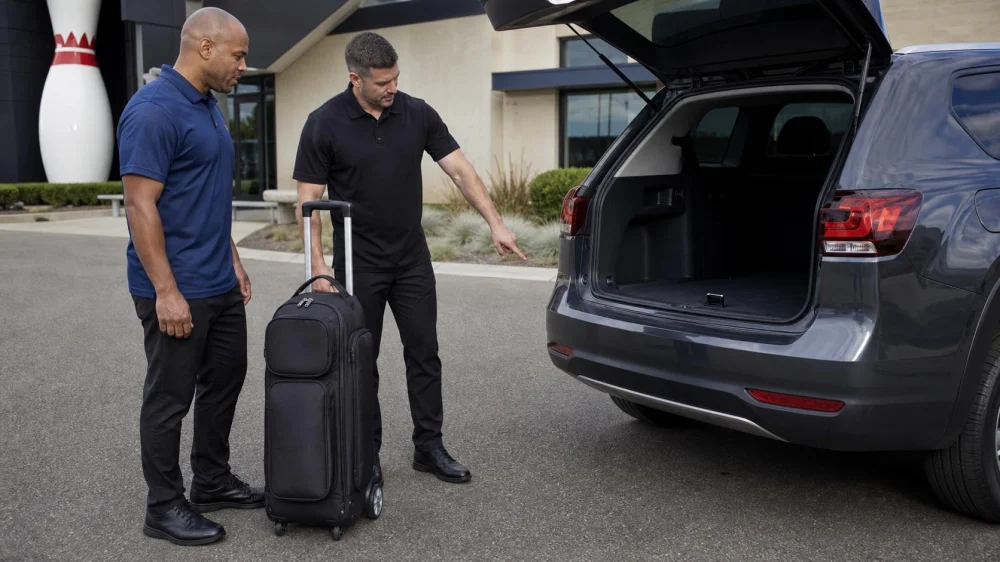
Bowling Ball Bag Transport: Lift, Secure, Roll, and Check
On this page
Quick answer
Use a bag designed for the number and weight of balls carried, and inspect the ball cups, zippers, straps, handles, frame, and wheels before travel. Remove loose accessories, close every compartment, use help or an appropriate cart for a load you cannot control, and keep the bag from rolling in the vehicle. At the alley, choose clear routes, control the bag on slopes, and inventory equipment before leaving.
Why a rolling bag still becomes a lifting load
A multi-ball roller may move easily on level flooring but still needs to cross curbs, stairs, trunks, door thresholds, ramps, and crowded approaches. Balls can shift inside, handles can extend unexpectedly, and wheels can roll when a vehicle stops. Safe transport depends on the whole route and the bag's condition, not just its advertised capacity.
This guide is for United States recreational bowlers moving ordinary personal equipment to and through a bowling center. It is not medical lifting advice, airline baggage policy, vehicle cargo engineering, or a product load rating. Follow the bag, vehicle, venue, airline, and event instructions plus individual physical limits.
Practical checklist
- Bag model, ball capacity, stated load limit, ball cups, dividers, base, frame, fabric, stitching, zippers, clips, straps, retractable handle, and wheel condition.
- Ball count and weights, shoes, wrist supports, cleaners, towels, tape, tools, spare parts, liquids, batteries, sharp items, and loose accessories.
- Home route, doors, thresholds, stairs, elevator, ramp, curb, pavement, weather, lighting, parking, drop-off, entrance, counter, lane, and storage area.
- Vehicle trunk or cargo space, lift height, seat and airbag zones, tie-down points, rolling direction, other luggage, heat, cold, sunlight, and theft exposure.
- Bower's lifting comfort and limitations, available helper, two-person handoff, cart, luggage trolley, accessible route, rest points, and emergency contact.
- Venue policy for bags, lockers, crowded lanes, ball racks, approach clearance, fire exits, food and drink zones, tournaments, and overnight storage.
- Name or private identifier, inventory photos, purchase records, insurance needs, baggage rules, claim tags, check-in and departure checklist.
Step-by-step plan
- Inspect the empty bag and operating parts, then place balls fully into their designed cups or compartments before adding lighter accessories.
- Close and secure every compartment, retract or lock the handle as designed, and verify no strap, lace, towel, or tool can drag or catch a wheel.
- Test control over a short level distance; if the bag tilts, shifts, catches, or exceeds your safe lifting ability, reduce the load or arrange help.
- Plan the route before lifting, open doors and clear obstacles, use elevators or ramps when practical, and do not pull a heavy roller uncontrolled down stairs.
- Lift only within personal limits using the designed handles and a stable handoff, keeping fingers clear of wheels, hinges, trunk lids, and pinch points.
- Place the bag low in the vehicle cargo area and restrain movement according to vehicle guidance; do not leave it loose on a seat or in extreme temperatures.
- At the venue, park the bag outside approaches and exits, keep it upright and controlled, and count balls, shoes, accessories, and compartments before departure.
Keep the bag model and instructions, ball and accessory inventory, condition photos, repair dates, wheel and handle checks, vehicle location, helper or cart plan, venue and airline policies, baggage receipts, identifiers, incident notes, and replacement records. Avoid displaying a home address on visible public tags.
Limits and important notes
Do not exceed the bag rating, use a damaged handle, carry balls in unprotected loose compartments, drag straps, ride on the bag, leave it rolling on a slope, pull it down stairs, or place it where it blocks exits or the approach. Do not leave equipment in a hot or freezing vehicle contrary to manufacturer guidance.
Stop for a cracked frame, separating seam, failed wheel, stuck handle, shifting ball, uncontrolled slope, blocked route, or pain while lifting. Ask venue staff for an accessible path or suitable cart and use another person for a safe handoff. Seek medical care for a significant strain, crush injury, fall, or other urgent symptom.
Frequently asked questions
Can a three-ball roller be lifted by its pull handle?
Only if the manufacturer explicitly allows it. Retractable pull handles may not be designed for the full suspended load.
How should the bag ride in a car?
Place it low in an appropriate cargo area and prevent rolling or shifting according to the vehicle's cargo guidance.
Can I pull the roller down stairs?
Do not let a heavy bag descend uncontrolled. Use an elevator, ramp, suitable assistance, or another route when available.
Should bowling balls stay in a parked car?
Avoid extreme heat, cold, direct sun, and long unattended storage; follow ball and bag manufacturer guidance.
Where should the bag sit at the lane?
Use the venue's designated area where it will not obstruct approaches, seating access, aisles, ball returns, or emergency exits.
Sources and evidence
Use the bag and ball manufacturer instructions, vehicle cargo guidance, bowling-center and event policies, accessibility procedures, and airline baggage terms when traveling. Those current product and venue sources override a generic transport checklist.
Conclusion and next steps
Inspect the bag, load balls only in designed compartments, close loose items, test rolling control, and plan stairs, curbs, doors, and vehicle placement before lifting. Use help or a cart within personal limits, secure the bag during travel, keep venue routes clear, and inventory everything before return.






 Jersey Lanes4.0 (1053 reviews)
 Bowlero Limerick4.0 (1681 reviews)
 Pinsetter Bar & Bowl4.0 (1710 reviews)
 NJ Grunt's Sports Bar3.0 (6 reviews)
 Tony Rado’s Pro Shop4.0 (30 reviews)
 Precision Fit Bowling Pro Shop4.0 (7 reviews)
 Why Ball Span Is Important for Comfort: Understanding the Key Factors
 Best Cheap Bowling Nights Near Me for Fun and Savings
 How to Develop a Consistent Strike Shot in Bowling: Tips and Techniques
 House Bowling Ball Fit: Check Weight, Holes, and Control
 Bowling Tips for Weekend Players Who Love the Game
 Top Rated Bowling Centers in Los Angeles with Affordable Deals and Entertainment | Southwestern Lanes