
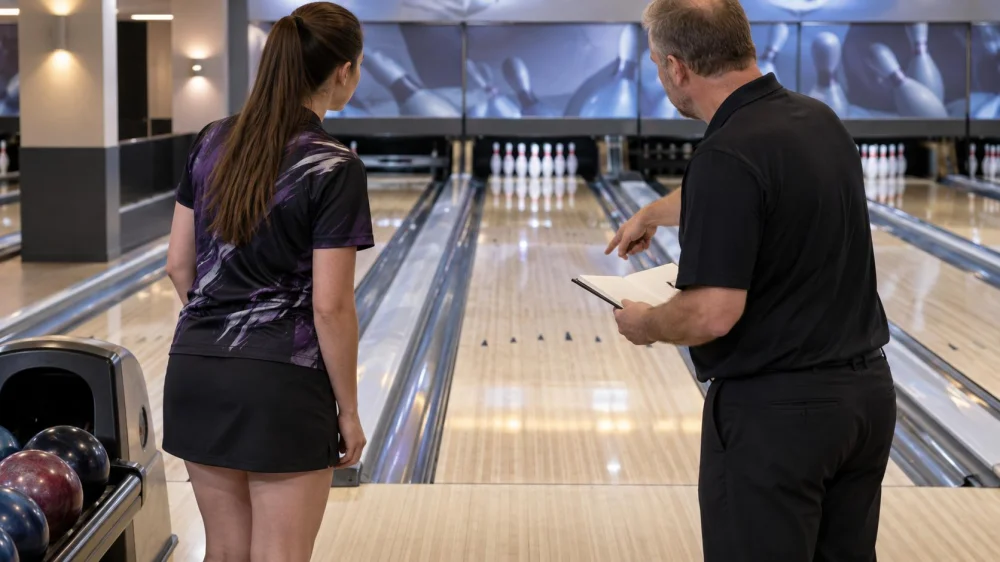
Bowling Lane Oil Pattern: Observe, Adjust, and Record
On this page
Quick answer
A lane's oil pattern influences where a bowling ball skids, hooks, and rolls, and the condition changes as balls travel over it. Ask whether pattern information is available, start with a familiar ball and target, observe the whole path and pin result, then change only one variable at a time. Record feet, target, breakpoint, speed cue, and result.
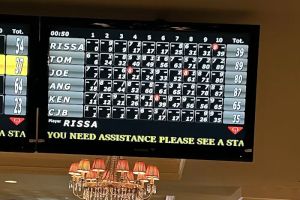
High Rollers Luxury Lanes & Sports Lounge
MASHANTUCKETSoutheastern Connecticut Planning RegionConnecticut
350 Trolley Line Blvd, MASHANTUCKET, CT 06338, USA
Ask what is available
League and tournament bowlers can ask the director when pattern information will be released and whether practice begins on a fresh or transitioned condition. Open-play staff may only identify a typical house condition, and the actual pair can vary with maintenance and prior use.
A pattern sheet describes application, not a guaranteed reaction. Lane surface, topography, temperature, ball surface, speed, rotation, traffic, and carrydown can change what the bowler sees.

Groton Bowling Center
GrotonSoutheastern Connecticut Planning RegionConnecticut
27 Kings Hwy, Groton, CT 06340, USA
Establish a baseline
Begin with a ball and release you know. Choose a starting board, a target near the arrows, and a visual breakpoint downlane. Use a comfortable speed rather than forcing extra hook.
Throw more than one controlled shot before drawing a conclusion, unless safety or equipment trouble requires stopping. Note misses separately so they do not distort the read.
Read ball motion
Watch the ball through skid, hook, and roll rather than looking only at the pins. Record whether it changes direction too early, slides too long, loses energy, crosses high, misses light, or leaves a repeatable spare.
USBC coaching material describes the oil pattern as the bowler's in-game opponent and notes that it changes during play. That is why a successful line can stop matching later.
Change one variable
Choose one small adjustment: feet, visual target, speed cue, release shape, or ball. Keep the other variables as steady as possible and compare several quality shots.
Do not copy another bowler's move without considering hand, speed, ball, and angle. A move that is correct for one player may send another into more oil or friction.
Track lane transition
Mark the frame or practice shot when the reaction changes. Watch traffic on both lanes of the pair, especially when multiple bowlers use similar lines. Recheck after a lane delay or long break.
Keep notes simple enough to use: ball, starting board, target, breakpoint, result, and next test. The goal is a repeatable decision process, not a perfect map of invisible oil.
Important limits
Do not step beyond the foul line, touch the lane, apply a substance to the approach, or use unauthorized equipment treatments to test or alter conditions. Ask staff about a suspected lane or approach problem and follow current league or tournament rules.
Frequently asked questions
Is every house pattern the same?
No. Centers, machines, surfaces, schedules, and traffic differ, even when conditions are described similarly.
Should I move after one bad shot?
First decide whether the shot was executed as intended. Use repeatable evidence rather than reacting to every miss.
Why does the pair change during a game?
Balls can move and absorb oil, while continued play changes the distribution and reaction.
Do I need a pattern sheet?
No. It can help, but direct observation and controlled adjustments remain essential.
Sources and evidence notes
USBC's in-game adjustments guidance explains that oil patterns change during play. Its Oil Pattern Bank overview shows why patterns are documented and compared.
Next steps
Ask about the condition, choose a baseline ball and line, watch full ball motion, and record each controlled change. Review the notes after the set with a coach or trusted teammate.

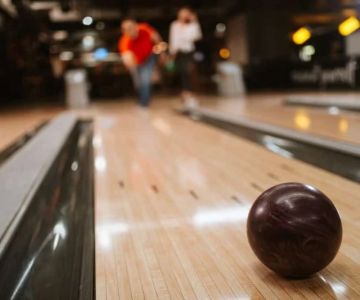




 High Rollers Luxury Lanes & Sports Lounge4.0 (1082 reviews)
 Groton Bowling Center4.0 (817 reviews)
 Game On4.0 (319 reviews)
 Tap Bowling3.0 (8 reviews)
 City Sports Grille4.0 (179 reviews)
 Buckland Billiards and Bar4.0 (370 reviews)
 Bowling Ball Cleaning: Timing, Products, and Rules
 Bowling Lane Oil Pattern: Observe, Adjust, and Record
 Bowling Trial Session: Evaluate Pace, Space, and Coaching
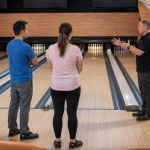 Bowling Class Position: Choose Space for Safe Learning
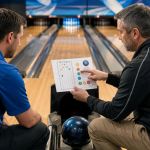 Bowling Practice Notes: Target, Speed Cue, and Result
 Bowling House Ball Fit: Holes, Weight, and Safe Return