
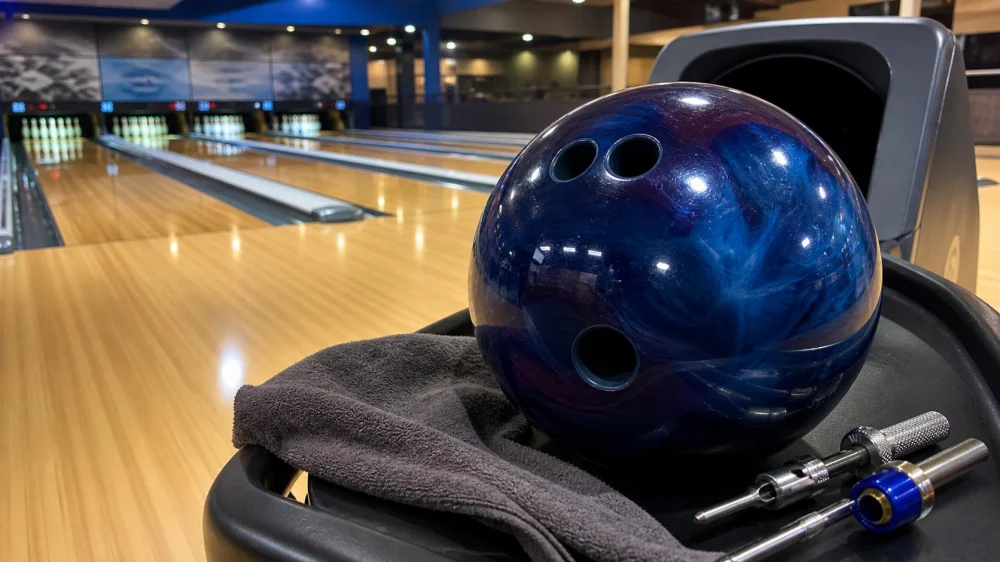
Bowling Thumb Sticks in the Ball: Stop, Check Fit, and Ask the Pro Shop
On this page
Quick answer
If your thumb hangs in the bowling ball, stop throwing before you strain the hand or launch the ball unpredictably. Dry the hand and hole, compare swelling, inspect for a sharp edge or damaged insert, and test the fit only while standing away from the approach. Do not grind, sand, tape, or enlarge a house ball. Return rental equipment to staff or ask a pro shop to evaluate a personal ball's span, pitches, hole size, interchangeable insert, and tape placement.

Bowlero Turnersville
Washington TownshipGloucester CountyNew Jersey
100 American Blvd, Blackwood, NJ 08012, USA
Why it matters
Humidity, swelling, grip pressure, tape, insert movement, span, and drilling angle can all change release. Pulling harder often makes the thumb swell and grip more.
This United States bowling guide is general. House-ball rules, tournament rules, hand anatomy, prior injury, interchangeable systems, drilling standards, and pro-shop services vary.

Practical checklist
- Stop after the first unsafe hang or altered release.
- Check the thumb for swelling, redness, pain, numbness, cut, or blister.
- Dry skin and hole with an approved clean towel.
- Inspect the hole edge, insert, tape, debris, and visible damage.
- Compare fit at the start and later in the session.
- Mark whether the hang occurs at insertion or release.
- Ask staff or the pro shop before changing equipment.
Step-by-step plan
- Move off the approach and set the ball securely in the rack.
- Remove rings and check hand symptoms without repeatedly forcing the thumb into the hole.
- Dry the hand and hole; never add powder where it can reach the approach.
- For a house ball, select another undamaged ball with safer fit and tell staff about the problem.
- For a personal ball, have a qualified technician review span, pitch, bevel, size, insert, and approved tape.
- Test any professional adjustment with gentle stationary fit checks before a controlled delivery.
- End the session and seek health advice if pain, numbness, swelling, or skin injury persists.
Note ball ownership and identifier, hole or insert, session time, lane conditions, hand swelling, tape or products, exact sticking point, symptoms, staff report, pro-shop measurement, adjustment, and retest.
Limits and warning signs
A larger hole is not automatically safer; excessive looseness can cause squeezing or loss of control. Home sanding can make the ball illegal for play, void service expectations, or create sharp geometry.
Stop bowling for a stuck release, uncontrolled loft, acute pain, numbness, swelling, or skin damage. Ask staff to remove damaged rental equipment and use a qualified pro shop for personal-ball modification.
Frequently asked questions
Should my thumb touch the hole?
Fit is individualized, but it should enter and exit without unsafe binding; a pro shop can assess it.
Can I use hand powder?
Only approved products away from the approach; spilled powder can create a dangerous slide surface.
Why does fit change during a session?
Heat, humidity, hydration, repeated gripping, and swelling can change the hand.
Can I sand a house ball hole?
No. Do not alter rental equipment; return it to staff and choose another ball.
Sources and evidence
The guide applies bowling approach safety, equipment ownership, hand-fit, surface contamination, release control, and pro-shop modification principles: stop unsafe use, keep the approach clean, preserve rental equipment, and use qualified fitting.
Conclusion and next steps
Stop throwing, move off the approach, dry and inspect the hand and hole, return a faulty house ball or ask a pro shop to assess a personal ball, and do not resume with symptoms.






 Circle Bowl & Entertainment4.0 (1497 reviews)
 Woodmere Lanes4.0 (681 reviews)
 AMF Garden City Lanes4.0 (1251 reviews)
 Big Daddy's Pro Shop5.0 (26 reviews)
 Round1 Bowling & Arcade Holyoke Mall4.0 (1516 reviews)
 Fritz's Lanes & Pro Shop4.0 (105 reviews)
 The Truth About Bowling Ball Hook Potential | Southwestern Lanes
 Best Bowling Alley Tips for Weekend Bowling: Improve Your Game and Enjoy Your Visit
 Bowling Alley Safety and Etiquette for First Visits
 How to Bowl More Consistently Using Lines and Angles
 Understanding the Importance of Ball Speed and Release Timing in Bowling
 Easy Bowling Techniques That Instantly Improve Accuracy and Score | Bowling Tips