
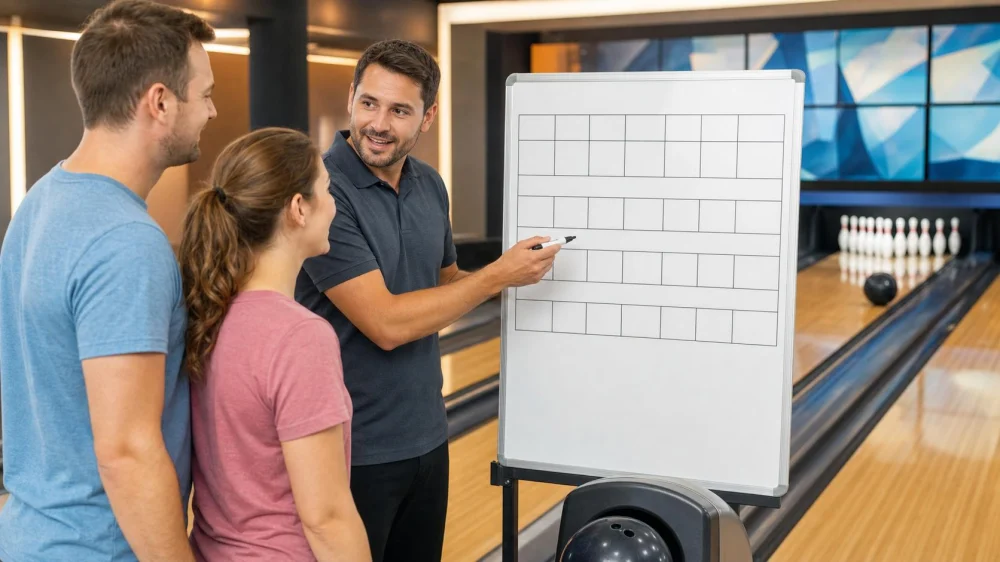
How Bowling Scoring Works: A Beginner’s Guide
On this page
Quick answer
A standard tenpin bowling game has ten frames. An open frame scores only the pins knocked down in that frame. A spare scores 10 plus the next delivery. A strike scores 10 plus the next two deliveries. Because bonuses depend on later shots, the scoring screen may leave a frame incomplete until those deliveries occur. The maximum game is 300.
A frame is one scoring turn. In frames one through nine, a bowler normally receives up to two deliveries to knock down ten pins.
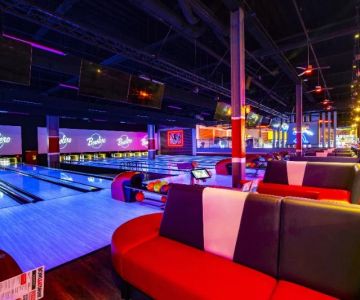
CT Bowling Alley by RPM - Lanes
StamfordWestern Connecticut Planning RegionConnecticut
600 West Ave, # Bowling Room, Stamford, CT 06902, USA
Frames and deliveries
The game progresses from frame 1 to frame 10. If the first delivery knocks down fewer than ten pins, the standing pins are reset only after the second delivery. If all ten fall on the first delivery, the result is a strike and the frame ends immediately.
A delivery can also be marked as a foul, split, gutter, or other notation. Automatic scoring records pinfall, but staff may need to correct wrong-bowler, wrong-lane, or machine-detection errors.
Buckland Billiards and Bar
ManchesterCapitol Planning RegionConnecticut
1131 Tolland Turnpike, Manchester, CT 06042, USA
Open-frame scoring
An open frame occurs when fewer than ten pins are knocked down across the frame's two deliveries. Its score is simply the pinfall from those deliveries.
Example: 6 pins on the first ball and 2 on the second equals 8 for the frame. If the next frame scores 7, the running total becomes 15 because no bonus connects the frames.
How a spare scores
A spare occurs when all ten pins are knocked down using both deliveries in a frame. It scores 10 plus the pinfall on the bowler's next delivery.
Example: a spare followed by a first ball of 7 makes the spare frame worth 17. The 7 also remains part of the next frame. A spare therefore rewards the next single delivery, not the complete next frame.
How a strike scores
A strike occurs when all ten pins fall on the first delivery. It scores 10 plus the pinfall on the next two deliveries.
- Strike, then 4 and 3: the strike frame scores 17.
- Strike, then spare made with 6 and 4: the strike frame scores 20.
- Two strikes, then 8: the first strike scores 28.
- Three consecutive strikes: the first strike scores 30.
Consecutive strikes cause the screen to wait longer because the first strike needs two future deliveries for its bonus.
The tenth frame
The tenth frame supplies bonus deliveries needed to finish a spare or strike. An open tenth has two deliveries. A spare earns one additional delivery; a strike earns two. These extra balls complete the tenth-frame bonus and do not create an eleventh frame.
Example: strike, 8, spare in the tenth equals 20 for that frame. Spare, then strike equals 20. Three strikes equal 30.
Worked scoring example
Consider four frames: strike; then 7 and spare; then 9 and 0; then 8 and 1.
- Frame 1: 10 plus the next two deliveries (7 and 3) = 20.
- Frame 2: spare, so 10 plus the next delivery (9) = 19. Running total: 39.
- Frame 3: open 9 + 0 = 9. Running total: 48.
- Frame 4: open 8 + 1 = 9. Running total: 57.
The same pinfall can produce different totals depending on when strikes and spares occur because bonus deliveries connect frames.
Common screen symbols
- X: strike
- /: spare
- –: zero pins on a delivery on many systems
- F: foul on many systems
- Circle around pinfall: split indication on many systems, not bonus points
Display conventions differ. A split symbol describes the leave after the first delivery; it does not change the numerical scoring rule. Ask center staff when the screen uses an unfamiliar mark.
How to check a questionable score
- Pause before the next bowler delivers if the machine recorded the wrong pinfall.
- Note the frame, bowler, delivery, and pins actually knocked down.
- Use the lane service control or ask staff for correction.
- Do not manually reset pins or enter the pinsetter area.
- For league or tournament play, follow the official's correction procedure.
Automatic scoring cannot always distinguish unusual pin action, fouls, or a ball delivered on the wrong lane. Prompt reporting preserves a clearer sequence.
Important notes
This article describes standard tenpin scoring. Candlepin, duckpin, no-tap events, baker formats, youth games, center promotions, and league or tournament rules may differ. Follow the format displayed or announced by the center.
Scoring knowledge does not replace lane safety. Wait for the pinsetter, remain behind the foul line, and ask staff about mechanical or scoring problems.
Frequently asked questions
Why did my spare not update immediately?
The score needs the pinfall from your next delivery before the spare frame can be completed.
Why did a strike leave two frames blank?
A strike needs the next two deliveries. With consecutive strikes, those deliveries have not both occurred yet.
Is a split worth extra points?
No. It describes the remaining pin arrangement. Scoring still depends on pinfall and whether the frame becomes a spare.
What is the highest possible score?
300, produced by twelve consecutive strikes: one in each of the first nine frames and three deliveries in the tenth.
Does a foul count as a delivery?
In standard play, the delivery counts but its pinfall is zero. Official rules address pin reset and special situations.
Sources and evidence notes
The United States Bowling Congress defines a legal delivery, foul, gutter ball, wrong-lane delivery, and other fundamentals in its basic rules. The scoring examples use standard tenpin strike, spare, open-frame, and tenth-frame bonus calculations. League and tournament procedures may add correction or competition requirements.
Conclusion and next steps
Practice with three imagined frames: an open frame, a spare, and a strike. Calculate them before checking the screen. Use Southwestern Lanes to find a nearby center, then focus on safe, repeatable deliveries while the scoring system handles the arithmetic. Understanding when bonuses resolve makes the scoreboard much easier to follow.



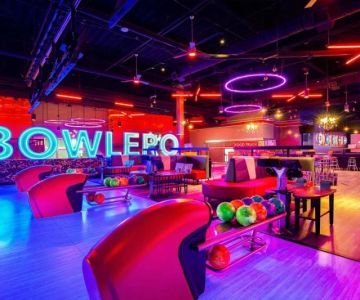
 JBMDL Bowling4.0 (18 reviews)
 Arcade Alley5.0 (4 reviews)
 Thunderbird Lanes Castor Ave4.0 (609 reviews)
 Lucky Strike Commack4.0 (889 reviews)
 Bilinskas Brothers Bowling Shop4.0 (29 reviews)
 T-Squared Social4.0 (322 reviews)
 Best Cheap Bowling Nights Near Me for Fun and Savings
 How to Fix a Consistent Bowling Drift Problem: Tips and Solutions
 Bowling Tips for Beginners Who Want Better Results Fast
 How to Bowl Better Under Pressure
 Why Your Bowling Footwear Impacts Your Slide
 Cheap Bowling Deals in Tulsa for Groups and Events