
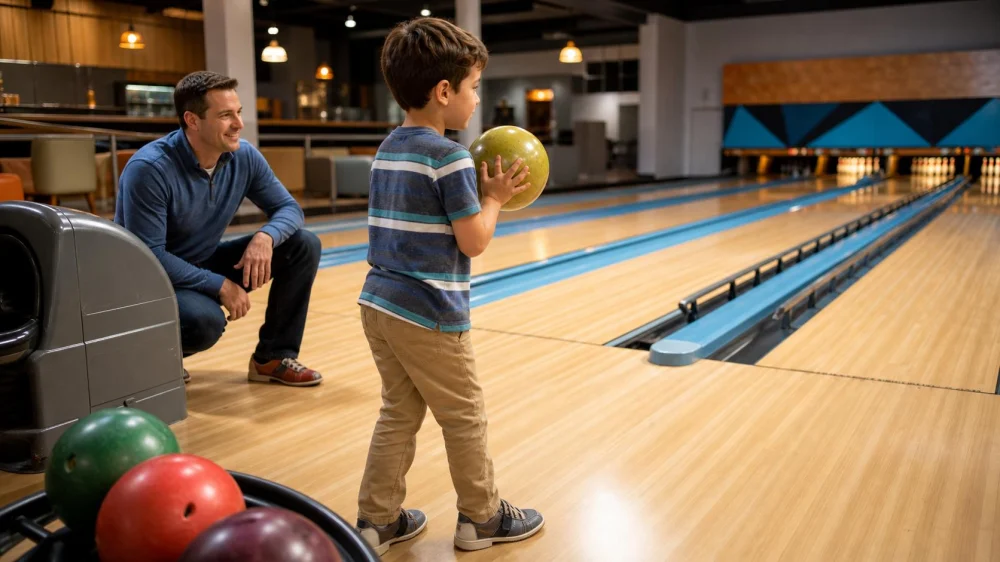
How to Choose a Bowling Alley for a Child’s First Game
On this page
Quick answer
For a child’s first bowling game, choose a center that confirms lane bumpers, lightweight house balls, properly sized rental shoes, a ball ramp if needed, and a quieter open-bowling time. Ask whether these features must be reserved. A short game at an uncrowded time is usually easier than a long session with loud music, long waits, or rigid scoring expectations.
A child-friendly bowling alley is one that can match its equipment, lane setup, environment, and staff support to a young beginner’s size and comfort—not simply one that advertises family entertainment.
This guide is for parents, guardians, and caregivers comparing bowling centers in the United States. It offers general planning guidance; the center’s current policies and your child’s individual mobility, sensory, or medical needs should guide the final decision.
K1 Speed - Indoor Go Karts, Corporate Event Venue, Team Building Activities
Mount KiscoWestchester CountyNew York
333 N Bedford Rd Suite 145, Mt Kisco, NY 10549, USA
Questions to ask before you book
A bowling center’s website may show family photos without explaining what is actually available during your visit. Call or use the center’s official contact channel and ask specific questions. A clear answer is more useful than a broad claim that a venue is “great for kids.”
- Are bumpers available on the lane? Confirm whether staff can raise and lower them for individual players or only for the whole lane.
- What is the lightest house ball available? Ask whether several lightweight balls are usually available at the time you plan to visit.
- Do you have the child’s rental shoe size? Ask how sizing works and whether children may wear approved clean shoes if no rental pair fits.
- Are ball ramps available? Confirm whether a ramp is first-come, first-served or can be reserved.
- Is open bowling available? League play, tournaments, private events, or lane maintenance can limit walk-in lanes.
- What will the sound and lighting be like? Ask whether the planned session includes flashing lights, music, announcements, or a special-effects format.
- How is play priced? Find out whether the center charges by game, by time, or by lane, and whether shoe rental is separate.
- What is the cancellation or late-arrival policy? This matters when a child’s energy, health, or comfort can change quickly.
Write down the staff member’s answers and the date you checked. Equipment availability and open-bowling schedules can change, so verify again if the visit is not soon.
Kid-friendly features that matter
Lane bumpers
Bumpers keep more rolls in play and reduce repeated gutter balls. They are best for a child who is learning the basic motion and needs an encouraging first experience. They are not ideal when a more experienced child wants to practice aiming without assistance. If adults and children will share a lane, ask whether bumpers can be assigned by player.
Lightweight house balls
A usable ball should feel controllable and allow the child to remove their fingers without sticking. Do not choose a ball solely by color or by the largest finger holes. A ball that is too heavy or has a poor fit can encourage dropping, twisting, or awkward lifting. If no suitable ball is available, ask staff for help instead of improvising.
Ball ramps and accessible approaches
A bowling ramp can help a child who cannot comfortably swing and release a ball. It can also reduce frustration for some very young beginners. Ask staff to position approved equipment and explain its use. Families with mobility needs should also verify the route from parking or the entrance to check-in, seating, restrooms, and the assigned lane.
Simple scoring controls
Automatic scoring reduces the need to calculate every frame. For a first visit, the useful features are easy name entry, the ability to correct a player order, and staff who can help when the system pauses. Avoid turning score into the main measure of success; completing a safe roll and taking turns are better first-session goals.
A manageable environment
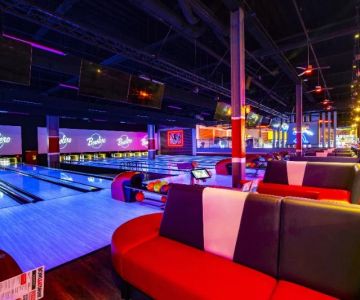
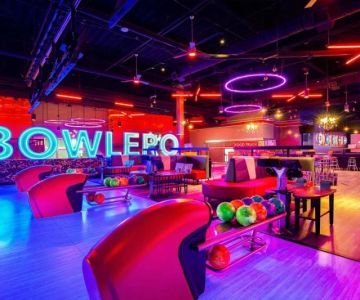
A center can change character by the hour. Weekday open play may feel calm, while a busy weekend or special-effects session may be crowded, dark, and loud. For a child who is sensitive to sound, lights, waiting, or unfamiliar spaces, ask for the quietest available period and whether you may briefly view the lane area before paying.
A simple first-visit plan
- Choose a short session. One game is often enough for a first visit. Leave room to stop early without treating it as a failure.
- Arrive before the reservation. Allow time for check-in, restroom use, shoe fitting, and choosing a ball without rushing.
- Ask for a lane orientation. Show the child the approach, foul line, ball return, seating area, and where to wait.
- Set one or two simple rules. For example: one bowler on the approach at a time, and hands stay away from the ball return opening.
- Practice carrying the ball safely. Use both hands when appropriate and keep the ball close to the body until the child is ready to roll.
- Let the child choose support. Offer bumpers or a ramp without making assistance feel like a penalty.
- Focus on turns, not totals. Praise waiting, safe movement, and trying again. Scores can matter later.
- Take a break when needed. Move away from the approach if the child becomes tired, overstimulated, or frustrated.
If the group includes adults or older children, keep the pace suitable for the beginner. A large group can make a first game feel long because the child waits through many turns.
Safety and comfort checks
Bowling alleys combine heavy equipment, smooth approaches, moving machinery, food, and foot traffic. A brief safety check protects the child and other bowlers.
- Keep food and drinks away from the approach; moisture can make the surface unsafe.
- Do not allow a child to reach into the ball return or stand in front of moving balls.
- Make sure rental shoes are securely fastened and reasonably dry before play.
- Use only the assigned lane and wait for neighboring bowlers when approaches are close together.
- Teach the child to stop behind the foul line; the lane beyond it is treated and may be slippery.
- Ask staff to retrieve stuck balls or fix equipment. Do not enter the lane or service area.
- Stop if the child reports pain, dizziness, numbness, or unusual discomfort.
Children who have mobility, balance, sensory, respiratory, or other health considerations may need a more specific plan. Discuss relevant needs with the center in advance and follow guidance from an appropriate healthcare professional when bowling could aggravate a condition.
When a bowling alley may not be the right fit
Choose another time or center when staff cannot confirm a suitable ball, footwear, lane support, or accessible route. A venue is also a poor match for that visit if the only available session uses lighting or sound that the child cannot tolerate, or if the expected wait is longer than the child can manage.
Do not rely on bumpers to solve every problem. Bumpers can keep the ball out of the gutter, but they do not correct an uncomfortable ball, unsafe lifting, an inaccessible approach, or sensory overload. When essential needs are uncertain, it is reasonable to visit briefly without playing, reschedule, or select a different activity.
Evidence and verification notes
The selection criteria in this guide reflect common bowling-center operating practices and broad safety principles: use equipment that fits the participant, keep the approach clear and dry, avoid moving machinery, and ask trained venue staff to handle lane or equipment problems. They are not claims about a particular US bowling center.
For current facts, use the individual center’s official website, reservation page, posted rules, and direct staff confirmation. Verify lane availability, equipment, accessibility, session format, prices, age rules, and outside-shoe policies before traveling. Manufacturer or center instructions should take priority over general guidance when using a ball ramp or other specialized equipment.
Frequently asked questions
What age is best for a child’s first bowling game?
There is no universal starting age. Readiness depends more on whether the child can follow basic safety directions, wait briefly for a turn, and use available equipment comfortably. Ask the center about its age policies and support options rather than assuming every young child will have the same experience.
Should a beginner use bumpers?
Use bumpers when they help the child stay engaged and learn the flow of a game. Skip them when the child prefers an unassisted challenge and can handle occasional gutter balls without becoming discouraged. The best choice can change during the session if the scoring system allows it.
How long should the first visit last?
Start with one game or a short timed booking. The actual duration depends on the number of bowlers, the center’s pace, and how often the child needs help. A smaller group usually means less waiting and an easier exit when energy drops.
Can a child bowl without rental shoes?
Policies vary. Bowling shoes are designed for the approach, while ordinary footwear may grip, mark the surface, or bring in moisture. Ask the center whether rental shoes are required and what approved alternatives exist if no size fits. Do not assume clean sneakers are permitted.
What if the child cannot lift a bowling ball?
Ask whether a lighter ball or approved bowling ramp is available. Staff can explain safe options for that center. Do not have a child drag, drop, or throw a ball they cannot control, and do not bring unapproved assistive equipment onto the approach.
Is a special-effects bowling session good for a first visit?
It can be fun for a child who enjoys music, dim lighting, and visual effects, but it is not ideal for every beginner. A standard open-bowling session is usually easier for learning where to stand, watching the ball, and communicating with adults or staff.
Next steps
Compare two or three nearby bowling centers using the same checklist: suitable equipment, session environment, open-lane availability, accessibility, pricing clarity, and responsive staff. Contact the most promising center, confirm the essentials for your planned date, and book a short session. A successful first game is one where the child feels safe, supported, and interested in taking another turn.


 Hamilton Lanes and Entertainment Center4.0 (316 reviews)
 Elizabeth Park Thistle Lawn Bowling Club5.0 (1 reviews)
 Brooklyn Bowl Philadelphia4.0 (534 reviews)
 Bill Colmer's Pro Shop4.0 (19 reviews)
 Dave & Buster's Manchester4.0 (3916 reviews)
 Bowlero Limerick4.0 (1681 reviews)
 Best Cheap Bowling Alleys Near Me for Families
 Best Tips for Staying Relaxed During Competition
 How to Choose the Right Bowling Lane for Best Performance
 How to Stay Motivated During Bowling League Seasons | Tips for Success
 How to Develop a Consistent Strike Shot in Bowling: Tips and Techniques
 How to Fix a Consistent Bowling Drift Problem: Tips and Solutions