
Bowling Alley Noise: A Hearing Comfort Checklist
On this page
Quick answer
Bowling noise comes from ball impacts, pins, ball returns, music, announcements, arcade games, and crowds. If you must shout to someone nearby, the sound may be too loud for comfort and hearing. Choose a quieter session, sit away from speakers and returns, take breaks, and use properly fitted earplugs or earmuffs when needed—especially for children or noise-sensitive guests.
Understand bowling noise
A bowling center creates intermittent impact noise layered over continuous background sound. The loudest moment at one lane may differ from the average level across a visit. Cosmic or party sessions may add amplified music and microphones, while tournaments can add crowd noise and repeated simultaneous play.
Sound risk depends on both level and duration. A short loud event and hours of moderately loud sound are not interchangeable. Individual susceptibility, prior noise exposure, hearing conditions, medications, and hearing devices can also affect a guest’s needs.
Jefferson Valley Lanes
Jefferson ValleyWestchester CountyNew York
3699 Hill Blvd, Jefferson Valley, NY 10535, USA
Check conditions before visiting
Call the specific bowling center and ask which sessions have lower music, fewer flashing effects, or fewer booked lanes. Ask whether leagues, parties, tournaments, or cosmic bowling overlap your time. “Open bowling” does not guarantee a quiet room.
Request a lane farther from speakers, arcade machines, event hosts, and busy ball returns. Ask whether there is a quiet lobby, café, or other safe break area and whether guests may wear hearing protection while bowling. For hearing-aid or cochlear-implant questions, follow the device clinician or manufacturer.
Choose practical hearing protection
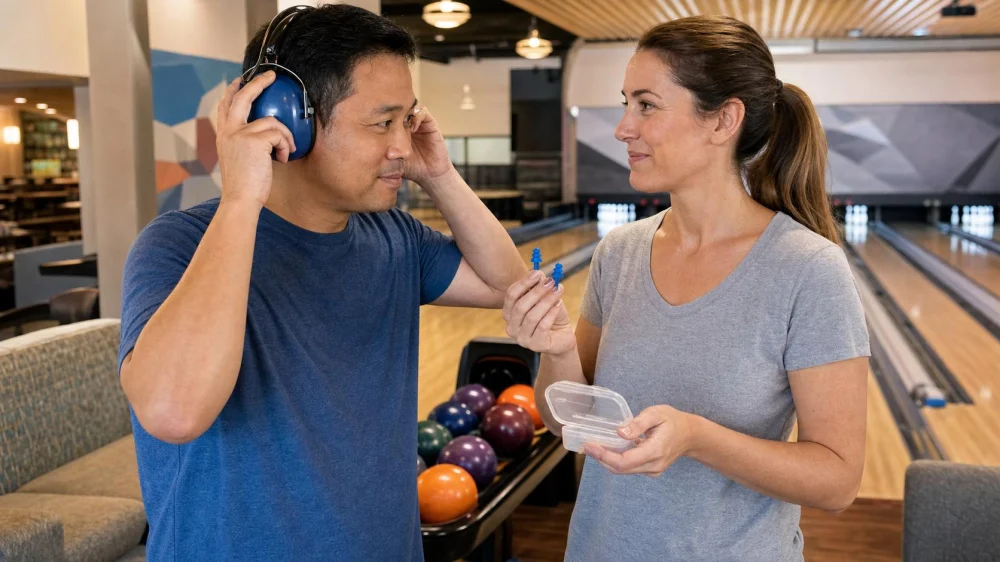
Common options are formable foam earplugs, reusable pre-molded plugs, custom plugs, and over-ear earmuffs. The best option fits correctly, remains comfortable, and still lets the wearer receive essential communication and warnings.
- Practice fitting protection before arriving.
- Use child-sized earmuffs designed for hearing protection, not ordinary headphones.
- Keep plugs clean and never share inserted earplugs.
- Check that eyeglass arms, hats, or hair do not break an earmuff seal.
- Do not insert a plug into an injured, infected, or recently treated ear without clinical advice.
More attenuation is not always better if it blocks communication needed for safety. People with specialized hearing needs should ask an audiologist about an appropriate protector.
Manage noise during the visit
Begin with protection in place instead of waiting for discomfort. Keep children within sight and use agreed visual signals for whose turn it is. Stand clear of active approaches and ball returns so reduced hearing does not create a collision risk.
Take regular breaks in a quieter area. Move away from speakers rather than raising voices or device volume. A phone sound app can support awareness, but an uncalibrated phone is not a professional exposure assessment and should not be used to declare a venue safe.
Respond to warning signs
Leave the loud area if sound becomes painful, hearing seems muffled, speech becomes harder to understand, or ringing begins. Do not “push through” because the game is prepaid. Tell staff if equipment or a speaker produces an unusual or extreme sound.
Seek medical advice for sudden hearing loss, severe ear pain, dizziness, drainage, injury, or persistent ringing or muffled hearing. Sudden hearing loss can require urgent evaluation. This guide cannot diagnose the cause.
Visit checklist
- Ask about music, events, crowd level, and quieter sessions.
- Request a lane away from speakers and arcade equipment.
- Bring clean, correctly sized earplugs or earmuffs.
- Practice fit and visual communication before play.
- Choose a safe quiet-break location.
- Watch for shouting, pain, ringing, or muffled hearing.
- Leave the loud area when symptoms appear.
- Contact a clinician for concerning or persistent symptoms.
Frequently asked questions
Are all bowling alleys dangerously loud?
No. Sound varies by building, session, music, crowd, lane location, and time. Check the actual conditions and respond to how difficult communication becomes.
Can noise-canceling earbuds replace hearing protection?
Not automatically. Consumer audio devices may not be rated or fitted as hearing protectors. Use purpose-designed protection and avoid increasing music volume to mask the room.
Should children wear earmuffs?
They may benefit during loud sessions, but the device must fit and must not prevent supervision or safety communication. Ask a pediatric hearing professional for individual guidance.
What simple sign suggests sound is loud?
CDC notes that needing to shout to be heard is a warning that sound is too loud. Distance, room acoustics, and individual hearing still affect this informal check.
Sources and limitations
CDC guidance recommends reducing volume, moving away, taking breaks, and using hearing protection when loud sound cannot be avoided. See preventing noise-induced hearing loss. NIOSH explains that exposure risk rises with both sound level and duration.
This is general recreational guidance, not a measurement of a specific bowling center or medical advice. Occupational limits are not a guarantee for recreational exposure. Individual hearing needs vary.
Next steps
Call for the quietest suitable session, request a lane away from amplified sound, and pack fitted hearing protection. Agree on visual signals and breaks. During play, treat shouting, pain, ringing, or muffled hearing as a reason to move away, pause, or leave—not as part of the bowling experience.

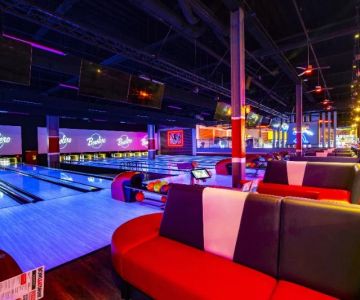


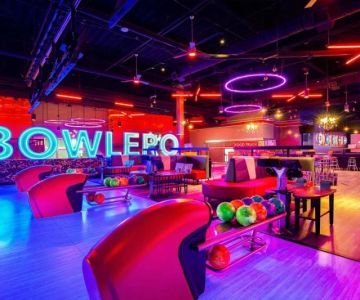
 Arnold's Bowling Bistro & Bar4.0 (136 reviews)
 Lucky Strike Melville4.0 (1141 reviews)
 New North Arlington Bowl4.0 (696 reviews)
 Shore Lanes4.0 (331 reviews)
 Dave & Buster's Milford4.0 (3412 reviews)
 Joey A's Bar & Grill at Break Point Bowl5.0 (2 reviews)
 Bowling Tips for Teens Who Want to Improve Fast
 How to Choose Bowling Shoes That Fit Perfectly for Comfort
 Best Bowling Alleys in Chandler for Families and Beginners
 Bowling Tips for Players Who Want Better Results
 What Is a Turkey in Bowling and Other Fun Bowling Terms Explained
 Why Ball Transfer Matters on Approach in Bowling