
Bowling Ball Cracked, Chipped, or Gouged at the Alley? What to Do
On this page
Quick answer
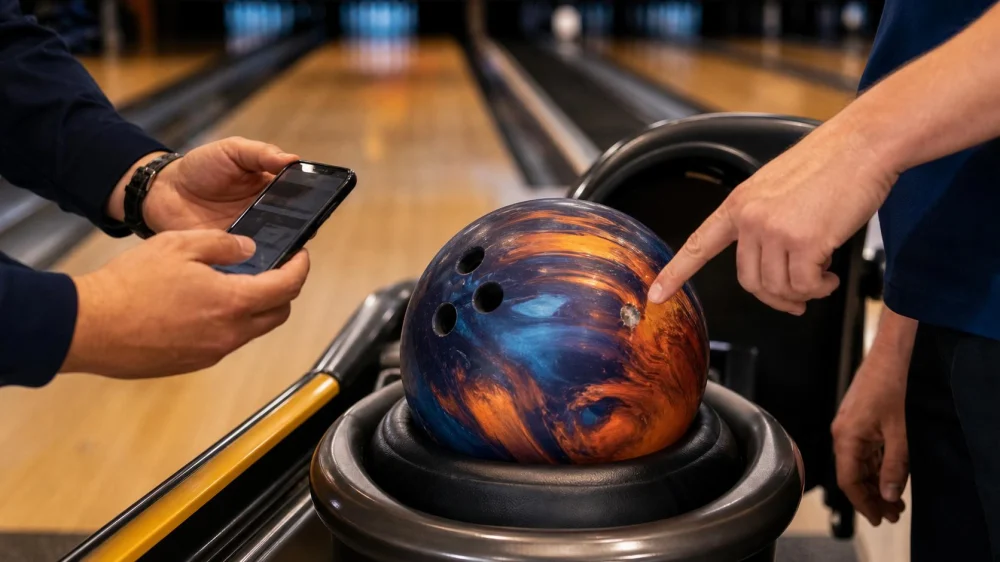
If your bowling ball returns with a new crack, chip, deep gouge, loose insert, lifted bridge, or unusual sound, stop using it. Keep hands away from sharp edges, place the ball securely in a cradle or bag, photograph it before cleaning, and notify the lane attendant or manager immediately. Ask staff to inspect the lane and ball-return path before anyone sends another personal ball through the equipment.
Do not sand, polish, glue, drill, heat, or throw the ball again to test it. Get a written incident record and have a qualified pro shop determine whether the mark is cosmetic, repairable, unsafe, or outside equipment rules. Save the purchase receipt, drilling record, serial information, and all messages for any center, retailer, manufacturer, or insurance claim.
Stop using the ball
Lift the ball from the return with two hands at its sides, avoiding the return opening and any damaged edge. Do not insert fingers into a cracked bridge or loose insert. If the ball is stuck, do not reach into machinery; call staff.
Place the ball on a stable rack only if it cannot roll or cut someone. Otherwise, use a padded ball cup or open bag away from foot traffic. Switch to an undamaged approved ball only after staff confirms the lane equipment is ready.

Round1 Bowling & Arcade Broadway Commons
HicksvilleNassau CountyNew York
358 N Broadway, Hicksville, NY 11801, USA
Inspect without altering evidence
Under good light, rotate the ball slowly on a cup. Look across the cover, track area, finger and thumb holes, bridge, inserts, balance hole if present, engraving, and pin area. Listen for a rattle without shaking the ball aggressively. Do not flex a crack or pick material from a gouge.
Compare the mark with earlier photos and maintenance notes. Lane belt marks, superficial scratches, chips, and structural cracks can look different, but a casual visual check cannot always determine depth or safety. Preserve the condition for a pro shop.
Document the ball, lane, and timing
Take wide photos of the entire ball and close photos from several angles with a ruler or coin nearby for scale. Capture the serial or identifying engraving, finger holes, track, and the relationship between the mark and other features. Record the time, lane number, frame, shot, and when you last saw the ball undamaged.
Note any unusual bang, slow return, jam, stop, or collision, along with witnesses and other affected balls. Photograph the scoring screen and lane assignment if permitted, but never enter the lane or machinery area to gather evidence.
Notify bowling-center staff
Tell the front desk and request a manager or mechanic. Describe observations without guessing at cause. Ask staff to pause the lane, inspect the return and pinsetter path, preserve relevant video or maintenance records, and move your group if needed.
Request an incident number or written report with center name, date, lane, ball description, observed damage, and staff contact. Read it before signing and ask for a copy. If the center offers an internal damage form or pro shop review, learn the deadline and required evidence.
Separate surface marks from structural damage
Light belt marks or surface scratches may be removable during routine maintenance, while deep gouges, missing coverstock, cracks around holes, a split bridge, or a crack that circles the ball may require repair or retirement. A loose finger insert can also create an unsafe grip even when the cover looks sound.
Do not decide solely by whether the ball still rolls. A damaged ball may affect release, balance, legality, or structural integrity. A pro shop can inspect depth, location, drilling, and manufacturer limits and explain whether resurfacing, plugging, redrilling, insert replacement, or removal from service is appropriate.
Get a pro shop assessment
Use a reputable pro shop familiar with the ball brand and current equipment specifications. Bring the unaltered ball, photos, incident report, receipt, drilling sheet, maintenance history, and any center correspondence. Tell the technician if the ball experienced heat, cold, impact, storage pressure, or recent drilling.
Ask for a written assessment describing damage, probable repair options, estimated cost, effect on performance, and whether repair would comply with league or tournament rules. Do not authorize destructive work until the responsible center or manufacturer says evidence is no longer needed.
Check warranty and claim paths
Read the ball manufacturer’s warranty for coverage period, exclusions, authorized drilling, serial information, original-owner requirements, and claim procedure. Drilling defects, impact damage, normal wear, temperature exposure, and lane-equipment incidents may follow different paths.
Send factual photos and documents to the retailer, driller, manufacturer, and center as directed; avoid filing duplicate claims for the same loss. Compare repair, replacement, shipping, drilling, inserts, and downtime in any proposed resolution. Keep the damaged ball until the claim is closed in writing.
Handle league or tournament play
Notify the league officer or tournament official before substituting equipment or attempting a repair during competition. Ask how the damaged ball should be removed from play and what documentation is required. Do not assume a center incident automatically creates an equipment-rule exception.
Use only a ball that fits properly and is accepted for the event. Save the score sheet, lane assignment, witness names, and official’s decision with the incident record. If the damage affects continued participation, ask how absence, blind score, refund, or rescheduling rules apply.
Store and transport the ball carefully
Use a padded, correctly sized bowling bag and secure it in the vehicle so it cannot roll or strike hard objects. Avoid prolonged temperature extremes and rapid hot-to-cold changes. At home, follow the manufacturer’s storage guidance and rotate the ball periodically if recommended.
Inspect the cover and holes before and after each session, wipe lane oil with an approved microfiber towel, and use only manufacturer-approved cleaning and maintenance methods. The USBC equipment maintenance guide recommends routine inspection and care; dated photos make it easier to identify when new damage occurred.



 Arnold's Bowling Bistro & Bar4.0 (136 reviews)
 Lucky Strike Melville4.0 (1141 reviews)
 New North Arlington Bowl4.0 (696 reviews)
 Shore Lanes4.0 (331 reviews)
 Dave & Buster's Milford4.0 (3412 reviews)
 Joey A's Bar & Grill at Break Point Bowl5.0 (2 reviews)
 Bowling Tips for Teens Who Want to Improve Fast
 How to Choose Bowling Shoes That Fit Perfectly for Comfort
 Best Bowling Alleys in Chandler for Families and Beginners
 Bowling Tips for Players Who Want Better Results
 What Is a Turkey in Bowling and Other Fun Bowling Terms Explained
 Why Ball Transfer Matters on Approach in Bowling