
Bowling Lane Arrows and Dots: A Beginner Targeting Guide
On this page
Quick answer
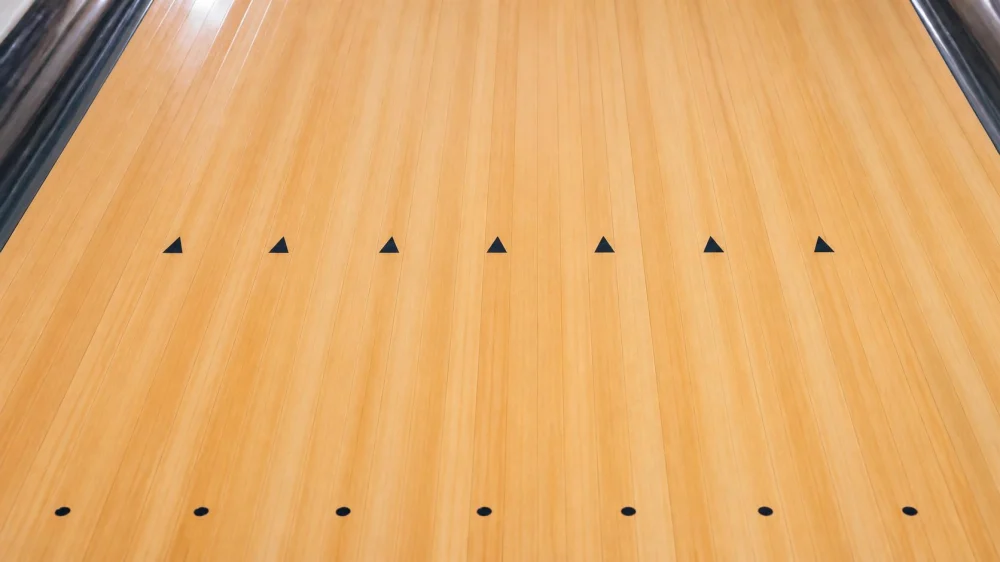
Bowling lane arrows and dots are visual references that help you repeat where you stand and where you roll the ball. Instead of staring at the pins, choose one arrow or nearby board as your target, start from the same approach dot, and note where the ball crosses. Change only one variable at a time.
This guide is for beginning and casual bowlers in the United States using a typical ten-pin bowling lane. Exact markings, lane conditions, and coaching terminology can vary by center.

What the lane markings do
Bowling lane targeting is the practice of using visible reference marks and boards to aim the ball along a repeatable path. The dots on the approach help a bowler choose a starting location. Dots near the foul line and arrows farther down the lane help describe the ball's early direction. The pins remain the goal, but the closer markings are usually easier to aim at consistently.
A standard-looking lane is built from narrow boards that run toward the pins. Bowlers often count boards from the gutter inward, but a first-time player does not need to memorize every number. Begin by identifying the center arrow and the arrows to its left and right. Then use the approach dots to return to the same starting place.
The markings do not force the ball to a destination. Speed, release direction, rotation, lane oil, ball surface, and the point where the ball contacts the lane all affect the final path. Think of the arrows as observation tools: they let you compare one shot with the next.

Monster Mini Golf Turnersville
Washington TownshipGloucester CountyNew Jersey
1 Shoppers Ln, Washington Township, NJ 08012, USA
Choose one practical target
For a straight beginner shot, select an arrow that creates a comfortable line toward the pocket or toward a spare. Right-handed bowlers often try to enter the space between the head pin and the pin immediately to its right; left-handed bowlers generally use the mirrored side. Do not force this angle if your natural straight roll works better elsewhere.
Look at the target before beginning the approach. Keep your eyes on that small area as the ball swings. A broad instruction such as “roll down the middle” is difficult to repeat. A specific instruction such as “cross the second arrow from my side” gives you useful feedback even when the pins do not fall as expected.
Choose a target you can actually see. Reflections, dim lighting, or lane graphics can make one mark unclear. A nearby board edge or dot can be a better reference. Guests with low vision can ask staff whether a lane has clearer markings or whether another safe visual cue is available.
Align your feet and target
Stand on the approach without stepping onto the lane surface. Pick an approach dot or board for the inside edge of one shoe and use it on each attempt. Hold the ball in a comfortable ready position, face the intended line, and take the same number of controlled steps.
Your feet and your ball do not finish in exactly the same place. The swing usually passes beside the body, so observe where the ball is released relative to your sliding foot. That relationship is personal. A friend can watch from a safe position behind the approach, or you can note the release visually without crossing into another bowler's space.
After the shot, record three facts: where you stood, which mark the ball crossed, and where it contacted the pins. A pin count alone does not explain the shot. A ball can hit the desired arrow but miss the intended pin area because it changed direction farther down the lane. That observation helps separate alignment from ball-motion questions.
Make simple adjustments
Repeat a reasonable shot before changing it. One result may reflect a rushed step or uneven release. When a pattern appears, make a small move and preserve everything else.
- Ball consistently misses right: for a straight delivery, try moving the starting position slightly right while keeping the same visual target, or choose a slightly more leftward target while keeping the feet fixed. Test only one option.
- Ball consistently misses left: use the mirrored adjustment—move the feet slightly left or choose a slightly more rightward target.
- Ball crosses the target but changes later: speed, rotation, equipment, or lane condition may be the stronger factor. Ask a coach or center staff member for general guidance.
- Direction changes every shot: return to balance, tempo, and a relaxed swing before making a lane adjustment.
More experienced hook bowlers often move their feet and target together to change the launch angle while preserving a preferred path. Beginners should first build a repeatable start and target rather than copying a large competitive adjustment.
Practice checklist
- Choose a suitable ball. Use a comfortable weight and holes that release without sticking.
- Find one starting mark. Note the approach dot or board beside your shoe.
- Pick one arrow. Use a clearly visible target that matches the intended pin area.
- Make three controlled attempts. Keep the start, target, and normal tempo consistent.
- Observe the crossing point. Watch the arrow area, not only the pins.
- Name the pattern. Decide whether the ball repeatedly misses left, right, or later downlane.
- Change one variable. Make a small foot or target move, then test again.
- Stop when form fades. Rest if grip, balance, or concentration becomes inconsistent.
Limitations and safety notes
Lane oil changes through play, and different balls respond differently. A target that worked earlier may need adjustment later. Automatic graphics, glow bowling, and worn markings can also change visibility. This guide explains a basic observation method, not a universal strike formula.
Stay behind the foul line because the lane surface can be extremely slippery. Wait until the sweep and pinsetting equipment finish their cycle. Keep hands away from the ball-return opening, and tell staff about a stuck ball or equipment problem. Do not enter the lane to retrieve anything.
Frequently asked questions
Should beginners look at the arrows or the pins?
The arrows are closer and usually easier to target consistently. You can briefly confirm the pin setup, then focus on the chosen arrow during the approach.
Which arrow should I use for a strike?
There is no single arrow for every bowler. Choose a mark that lets your normal delivery enter the preferred pocket, then adjust from observed results.
What if my ball never crosses the arrow I choose?
First check alignment and whether your swing follows the intended direction. Use a nearer dot if the arrow is too difficult to see or hold in focus.
Do lane arrows help with spares?
Yes. Select a target that sends the ball toward the remaining pin, and build a repeatable starting position for that spare pattern.
Evidence note
The method follows a broad coaching principle used across precision sports: choose a visible reference, repeat the setup, observe the outcome, and change one factor at a time. Individual ball motion and center conditions differ, so a certified coach or knowledgeable pro-shop professional can provide personalized instruction.
Next steps
During your next game, choose one start mark and one arrow for the first ball. Track five attempts without chasing every pin result. When you can describe where the ball crossed and where it finished, make one small adjustment and compare. That simple feedback loop is the foundation of useful lane targeting.





 Tap Bowling3.0 (8 reviews)
 AMF Centereach Lanes4.0 (543 reviews)
 Sparta Lanes4.0 (575 reviews)
 Devon Duckpin Bowling Lanes3.0 (16 reviews)
 Memory Lanes4.0 (208 reviews)
 Bowlero Deptford4.0 (1110 reviews)
 Best Family-Friendly Bowling Alleys with Kids Activities and Party Packages
 How to Develop Consistent Spare Strategies
 How to Organize a Bowling Birthday Party at a Local Alley
 How to Find Bowling Deals Near Me for Groups and Parties
 How to Develop a Consistent Strike Shot in Bowling: Tips and Techniques
 How to Prepare for Your First Bowling Tournament