
Bowling Ramp Guide: Set Up, Aim, Roll, and Clear the Lane
On this page
Quick answer
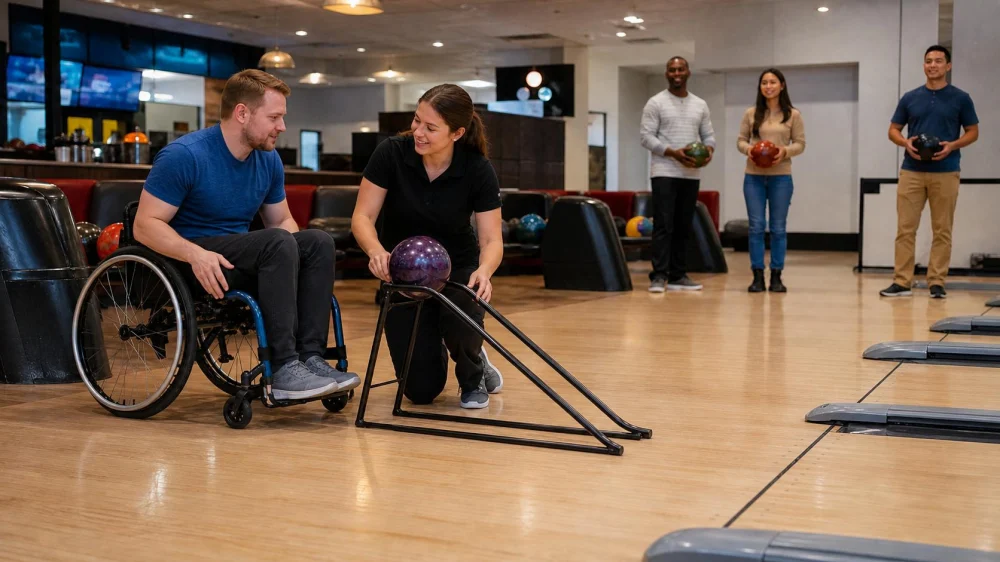
A bowling ramp is an assistive guide that lets a player push a ball down a sloped frame from the approach. Ask the bowling centre for an approved ramp, staff setup, suitable ball, and lane placement. Keep fingers away from the rolling path, release only when the lane is clear, and move the ramp out of other bowlers’ approach space after each turn.
Request the right equipment
Call ahead to ask whether ramps are available, how many the centre has, whether reservation is possible, and what accessibility route reaches the lanes. Describe the player’s seated or standing position, reach, grip, vision, and need for staff or companion assistance without sharing unnecessary medical details.
Ask about lightweight balls, bumpers, ball pushers, lane-side seating, wheelchair clearance, and accessible restrooms. Bumpers and ramps serve different functions and may have age or league rules. Confirm whether the equipment can be used during open bowling, parties, leagues, or special events.
Let staff set the ramp
Use the centre’s equipment and follow staff instructions. Place the ramp on the approach, never onto the oiled lane surface or past the foul line. All feet or wheels should sit stable and square. A rocking, bent, cracked, or loose frame should be taken out of use and reported.
Align the ramp with the player’s centre and chosen target while leaving enough room for safe transfer or wheelchair positioning. Lock wheelchair brakes when appropriate and follow the user’s mobility plan. Do not use a chair, table, toy, or homemade object as a substitute ramp.
Choose a manageable ball
A ball must roll freely down the ramp without overloading the frame or helper. Lighter house balls may be easier to lift, but the holes still need safe hand placement if the player carries them. Ask staff which balls are compatible and whether a ball without finger use is available.
One adult or trained helper should lift the ball with a balanced grip and place it at the top while the player’s hands remain clear. Never let a child stand beneath the ramp or hold the front. Do not stack several balls on the frame or leave one unattended at the top.
Aim and release together
Start by aiming at a broad lane target, such as the centre arrow area, then make small changes. The player can push the ball, signal a helper, or use an approved pusher according to ability and preference. Count down only when the player wants it; the turn should preserve choice rather than become a helper’s shot.
Check adjacent lanes before release. Bowlers on nearby approaches may have priority according to lane courtesy. Wait until pins reset, the sweep is raised, and no staff member is on the lane. Never send a second ball to hit one that stopped; alert staff.
Keep the approach and return clear
After release, keep the ramp stable until the ball clears, then move it to the agreed parking location outside active approaches. Route cords, bags, mobility devices, and chairs away from walking lines. Other players should not climb, sit, or lean on the equipment.
At the ball return, wait for balls to stop moving before reaching. Pinch points can exist where balls emerge or collect. A helper can retrieve the selected ball and keep extras on the rack. Do not place the ramp against the return where it can block access or be struck.
Adjust for comfort and results
Change direction in small increments rather than swinging the entire ramp during a busy approach. If the ball repeatedly enters the gutter, try bumpers when allowed, a central starting line, or a small angle correction. Score is secondary to a repeatable, comfortable release.
Pause for fatigue, pain, frustration, sensory overload, or unsafe crowding. Short turns with seating and water breaks can be more enjoyable. Ask staff for a quieter lane or extra time when available. Adapt the number of frames to the player instead of forcing a standard game pace.
Frequently asked questions
Are bowling ramps only for children?
No. They can support players of many ages with strength, balance, reach, or mobility needs. Availability and event rules vary by centre.
Can a ramp cross the foul line?
It should remain on the approach in the staff-approved position. The lane is oiled and not a walking or equipment-placement surface.
Who should push the ball?
The player should control the choice and release as much as possible. A helper may position or push when requested and permitted, using an agreed signal.
Evidence and limitations
This guide reflects common bowling-centre safety and inclusive recreation practice: approved equipment, stable approach placement, clear pinch points, lane courtesy, player choice, and staff response for stopped balls. Ramp designs, house rules, accessibility, and competition rules vary. Centre staff and equipment instructions control.
Conclusion and next steps
Reserve the ramp and lane access, ask staff to inspect and position the frame, and select a manageable ball. Keep hands, approaches, and returns clear. Use broad targets and small adjustments, then park the ramp safely after each turn so the player and neighbouring bowlers share the space comfortably.





 Sports Scene Restaurant at Oakwood Lanes4.0 (47 reviews)
 Big Daddy's Pro Shop5.0 (26 reviews)
 AMF Wantagh Lanes4.0 (478 reviews)
 The Gutter L.E.S.4.0 (464 reviews)
 Oakwood Lanes4.0 (521 reviews)
 NJ Grunt's Sports Bar3.0 (6 reviews)
 Step-by-Step Guide to Improve Bowling Balance and Footwork
 Best Tips to Improve Corner Pin Spares
 Bowling Tips for Beginners That Will Instantly Improve Your Game
 Best Bowling Balls for Beginners: Affordable High Performance
 Best Bowling Tips for Beginners to Improve Score Fast Without Expensive Equipment
 How to Record Your Bowling Games for Self-Analysis