
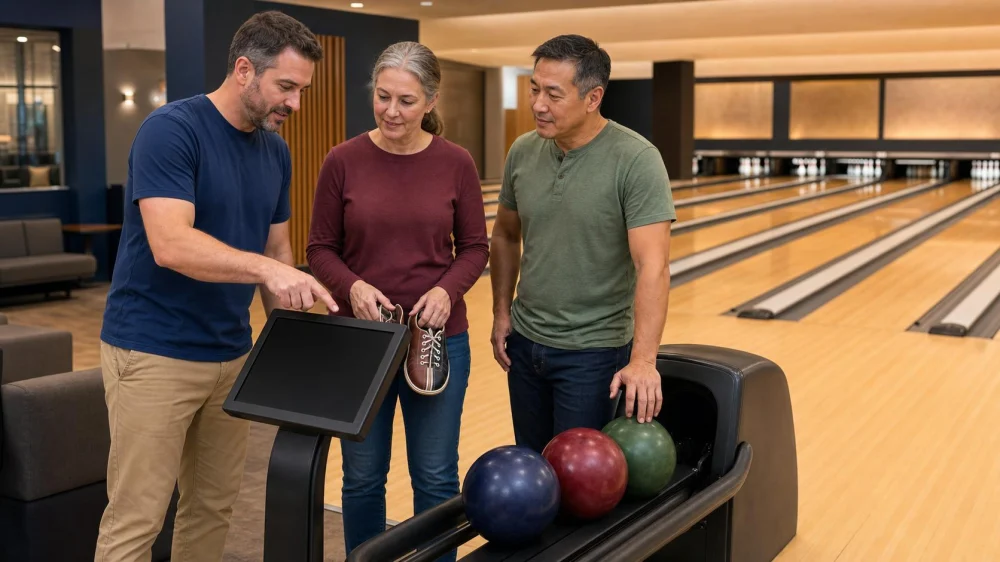
How to Plan Bowling Order for a Mixed-Skill Group
On this page
Quick answer
Group bowlers by the pace and support they need, not only by average score. Put the agreed player order into the scoring system before starting, keep each person's ball and shoes easy to identify, and use one ready area away from the approach. Alternate experience levels when helpful, but let players choose companions and accommodations. Rebalance lanes only between games.
This guide is for casual group bowling in the United States. The bowling center's lane limits, scoring system, accessibility options, and staff instructions take priority.
Know the group before assigning lanes
Ask who is new to bowling, who bowls regularly, and who needs bumpers, a ball ramp, lighter balls, extra time, seating, or help entering names. Do this privately enough that people can share needs without being singled out.
Find out whether the group wants a social game, friendly competition, practice, or a timed event. A lane arranged for conversation may not suit players focused on a complete league-style game.
Confirm the center's maximum bowlers per lane and how long the reservation lasts. A lane that technically accepts many names can still move too slowly for the group to finish.
Build a practical bowling order
There is no universal best sequence. Use these decision rules:
- Place a confident volunteer first to demonstrate where to stand, when to bowl, and how the scoring turn advances.
- Alternate faster and slower players when that creates a steady rhythm.
- Keep a caregiver, interpreter, or support person near the player they assist if both are comfortable with that order.
- Avoid always placing beginners last, where they may feel watched as other lanes wait.
- Let children and adults remain with their chosen household or team when supervision matters.
- Use the same order for the full game unless the scoring system and staff support a change.
Read the order aloud once and show where it appears on the scoring screen. Ask players to watch for the name before theirs so they can prepare without entering the approach early.
Plan equipment and support
Collect rental shoes and choose house balls before the lane clock becomes the focus. Each bowler should select a ball that fits comfortably and can be controlled without strain. Do not reserve many house balls on the return rack “just in case.”
Ask staff for bumpers, ball ramps, adaptive handles, or other support equipment. Some features must be set for particular players in the scoring system. Do not move center-owned ramps between lanes without permission.
Arrange balls by player or color while remembering that color and weight are not unique identifiers. Point out the ball's printed weight and finger fit individually. Keep bags, coats, drinks, and personal items away from the approach and ball return.
Keep the game moving
- Use one ready player. The next bowler can stand behind the approach while the current bowler finishes.
- Respect adjacent lanes. Follow the center's lane courtesy and do not step onto the approach beside an active bowler when local etiquette says to wait.
- Delay coaching. Give one short tip only when the player wants it; long lessons between every ball slow the group and add pressure.
- Take planned breaks. Pause between frames or games rather than disappearing during a turn without telling the group.
- Track food orders separately. One organizer can handle payments or deliveries while the scoring order continues.
- Use the center's correction process. Ask staff to fix scoring or equipment problems rather than repeatedly pressing controls.
Fast play is not the only goal. A steady, predictable pace gives beginners time to prepare without leaving experienced players uncertain about whose turn comes next.
Coordinate multiple lanes
Balance the number of players first, then consider pace and social groups. If one lane has several first-time bowlers using a ramp, give it fewer total bowlers rather than expecting it to match another lane turn for turn.
Choose one contact on each lane who understands the order and can call staff. Keep team names and player names distinct without entering private or inappropriate information on public screens.
Do not switch players between active games unless staff explain how the scoring system handles it. Compare team results only after both lanes finish the same format; different numbers of frames or handicaps are not directly comparable.
Handle late arrivals and changes
Ask at check-in whether a late player can be added and whether earlier frames can be skipped. Do not restart a full group automatically. A late arrival may join the next game or be added at the end of the current order according to center policy.
If someone stops early, tell staff or use the approved scoring option. Do not keep rolling balls in an absent person's name simply to preserve the order.
Rebalance lanes between games if one finished much earlier. Ask the group first; social comfort may matter more than a perfectly equal pace.
Group bowling checklist
- Reservation length and lane capacity are confirmed.
- Support, seating, bumper, and ramp needs are known.
- Players are distributed by pace and preference.
- The order is entered and reviewed before play.
- Shoes and balls fit each bowler.
- The ready area stays behind the approach.
- One contact per lane can ask staff for help.
- Late-arrival and break plans are understood.
- Lane changes wait until the game ends.
Limitations and safety notes
Bowling centers differ in automation, bumpers, ramps, lane limits, shoe requirements, and courtesy rules. Staff should set or approve adaptive equipment and address lane, ball-return, or scoring-machine problems.
Do not step onto an oiled lane, reach into a ball return, cross the foul line, or retrieve a stuck ball. Stop play and call staff for spills, damaged shoes, unusual approach conditions, equipment noise, or injury.
Frequently asked questions
Should the best bowler go first?
Not necessarily. A confident volunteer can set the rhythm, but the best order also considers pace, support, and social preference.
How many players should use one lane?
Use the center's limit and reservation length, then consider pace. Fewer players may be appropriate when several need extra time or equipment.
Can bumpers be turned on for one player?
Many systems allow player-specific settings, but features vary. Ask staff before starting.
What if one lane finishes much earlier?
Let both games end, then rebalance for the next game if the group wants. Avoid interrupting active scoring.
Should beginners and experienced bowlers use separate lanes?
Only if that suits the group. Mixed lanes can be supportive, while pace-based lanes can finish more evenly. Ask players rather than assigning by skill alone.
Sources and evidence notes
The plan reflects broad bowling-center practice: enter a stable player order, prepare equipment before turns, observe lane courtesy, keep the approach clear, and ask staff to manage machinery and adaptive equipment.
No lane capacity, game duration, scoring feature, bumper setting, or skill improvement is assumed. The center's equipment and current policies control the session.
Next steps
Before check-in, collect each player's name, experience level, and support needs. Ask the center how many players fit comfortably within the reservation, then draft a lane and turn order. Review it once at the scoring screen and make any major rebalance only after the first game.

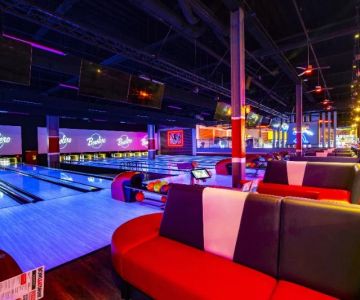



 Bowlero Belleville4.0 (1958 reviews)
 AMF Wantagh Lanes4.0 (478 reviews)
 Pavlinko Pro Shop5.0 (53 reviews)
 Special Bowl3.0 (2 reviews)
 Lehigh Valley Grand Prix4.0 (987 reviews)
 Shore Lanes4.0 (331 reviews)
 Best Bowling Alley Tips for Quick Progress - Improve Your Game Fast
 Bowling Tips That Help You Improve Balance, Timing, and Accuracy
 How to Master Bowling Footwork Quickly
 Bowling Alley Safety and Etiquette for First Visits
 Best Bowling Alley Foods to Keep You Energized and Focused
 How to Prevent Wrist Pain in Bowlers