
Bowling Ball Mix-Up: Identify Gear and Clear the Return
On this page
- Quick answer
- Identify personal equipment before play
- Keep the ball return organized
- Pause when your ball is missing
- Compare similar balls without guessing
- Separate house balls from personal balls
- Follow league and tournament procedures
- Inspect a returned ball for damage
- Protect gear between games
- Do a final lane-area sweep
- Gear checklist
- Bowling rules and resources
- Conclusion and next steps
Quick answer
Before bowling, photograph your ball, serial number, layout, grips, and distinctive marks, then keep it on your assigned return or in your bag. If it disappears or a similar ball appears, stop your group, check lanes, and ask staff, a league officer, or tournament official before taking anything. Never reach into the return or remove a ball based only on color. Verify the serial number and custom details, clear excess balls from the rack, and inspect recovered equipment before resuming.
A mix-up is often accidental, especially when teams use the same model or color. Calm documentation resolves it faster than confrontation.

Identify personal equipment before play
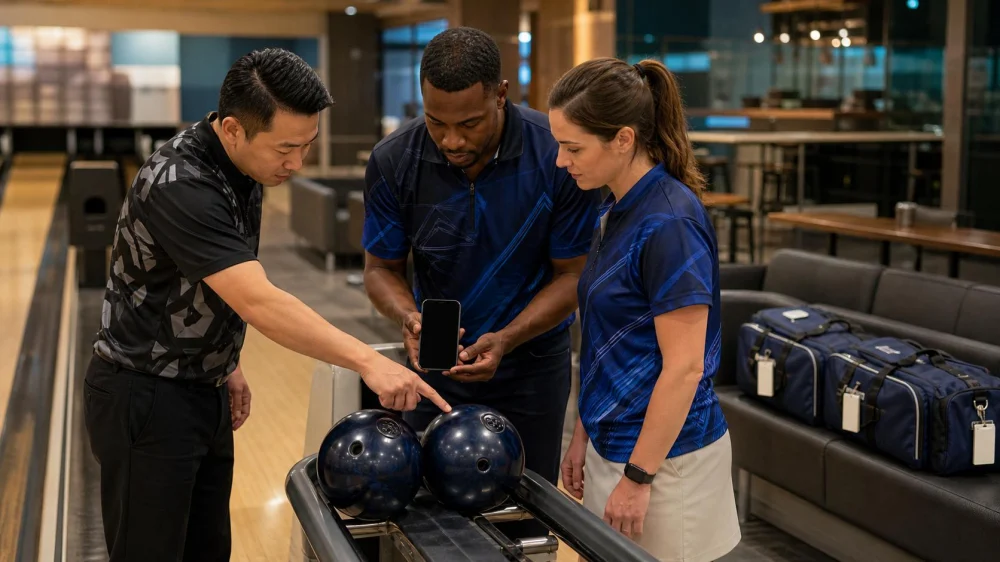
Record the manufacturer, model, weight, color pattern, serial number, drilling layout, finger inserts, thumb system, and visible wear. Keep receipts and drill-sheet records when available.
Use a removable bag tag or another association-approved identifier. Do not add a surface marking that changes the ball or violates competition rules.
Photograph each side in good light before travel. A swirl pattern or small scratch can distinguish two otherwise identical balls.
Hudson Lanes and Games
Cortlandt ManorWestchester CountyNew York
2192 Crompond Rd, Cortlandt Manor, NY 10567, USA
Keep the ball return organized
Place only the balls currently needed on the rack and keep backups in closed bags away from walkways. Crowded returns make selection harder and can pinch fingers.
Do not rest towels, drinks, phones, rosin bags, or shoes on the return. Keep hands out of openings and wait for moving balls to stop.
Agree with adjacent players on where personal and house balls will sit. Return unused house balls to the designated rack when staff permits.
Pause when your ball is missing
First check whether the ball is delayed in the return or on the other lane of a pair. Stop deliveries and use the center's help system if machinery may be involved.
Look at neighboring returns, seating, practice areas, pro shop, and your bag without entering restricted spaces. Ask nearby bowlers politely whether a similar ball was moved.
Tell staff the lane, time, last delivery, ball description, serial number, and people who observed it. Ask whether cameras or found-property procedures are available.
Compare similar balls without guessing
Do not pick up and throw a ball merely because its color and logo match. Compare the engraved serial number, finger spacing, inserts, thumb, surface pattern, and layout.
Have staff or an official witness the comparison when ownership is disputed. Avoid posting accusations or personal images while facts are unclear.
If two balls remain difficult to distinguish, use purchase, drilling, registration, or tournament inspection records.
Separate house balls from personal balls
House balls usually use standard markings and conventional drilling, but centers identify them differently. Ask staff before removing one from the lane area.
Do not place a personal ball on a public storage rack where another guest may reasonably assume it belongs to the center.
When a house ball is mistakenly packed, return it immediately and explain the error. When a personal ball is mistaken for house equipment, show staff the serial and drilling details.
Follow league and tournament procedures
Competition may require equipment registration, inspection, approved-ball status, or a recorded ball list. Keep those records current and accessible.
Report a missing or substituted ball to the designated official before changing equipment or resuming play. Event rules may control replacement, delay, and practice.
Do not borrow another bowler's ball in certified play without checking the current rules and obtaining required approval.
Inspect a returned ball for damage
Check the cover, finger holes, inserts, thumb components, engraved serial number, and surface for new chips, gouges, cracks, heat damage, or chemical residue.
Do not bowl with a ball that appears unsafe or altered. Photograph the condition and notify center staff and the appropriate official.
Let a qualified pro shop determine whether cleaning, repair, resurfacing, or retirement is appropriate under current specifications.
Protect gear between games
Close and tag bags, keep valuables with you, and move equipment only with the owner's knowledge. Do not leave gear in an unlocked vehicle or extreme heat.
For multi-day events, ask about secure storage and check-in procedures. Count balls and accessories before leaving the center each session.
Keep a private inventory with serial numbers, photos, receipts, and emergency contact details. Avoid displaying home addresses publicly on tags.
Do a final lane-area sweep
Check the return, under seating, shoe area, console shelf, charging outlets, table, and storage rack. Compare every ball with the inventory before closing bags.
Return house equipment, dispose of trash, and report any found personal item rather than carrying it away to locate the owner yourself.
If gear remains missing, obtain an incident or lost-property reference and follow up through the center's official contact channel.
Gear checklist
- Current photos and serial numbers for every personal ball
- Distinct grips, layout, surface, and wear documented
- Only active balls placed on the assigned return
- Backups stored in closed, tagged bags
- Staff notified before accessing equipment or changing play
- Ownership verified by serial and custom details
- Recovered ball inspected before use
- Final inventory completed before departure
Bowling rules and resources
USBC provides links to the current playing rules, approved ball list, etiquette, definitions, and complaint information through its general rules resources.
The USBC bowler information hub explains the governing body's role in consistently interpreting and enforcing certified competition rules.
House policies apply to casual play; league and tournament officials interpret current competition requirements.
Conclusion and next steps
Prevent ball mix-ups with photos, serial numbers, organized returns, and closed bags. When a ball goes missing, pause, protect the machinery area, and involve staff or the event official. Verify ownership with more than color, inspect the recovered ball, and inventory gear before leaving. A calm, documented process protects equipment and relationships at the lanes.





 Highland Bowl4.0 (265 reviews)
 Round1 Bowling & Arcade Fashion District Philadelphia3.0 (1128 reviews)
 Cypress Lanes4.0 (103 reviews)
 Middletown Harmony Bowl4.0 (108 reviews)
 Lucky Strike Melville4.0 (1141 reviews)
 Gil Hodges Lanes4.0 (73 reviews)
 Bowling Tips That Help You Improve Accuracy and Control
 How to Bowl More Consistently Using Lines and Angles
 Why Your Ball Needs Polishing Regularly
 How to Join a Bowling League in the United States: Step-by-Step Guide
 Top Rated Bowling Centers in Los Angeles with Affordable Deals and Entertainment | Southwestern Lanes
 Best Bowling Techniques for Higher Scores and Better Control