
Bowling Lane Oil: Read the Pattern as Conditions Change
Table of contents
- Why bowling lanes have oil
- What an oil pattern does to the ball
- Watch the ball from release to pins
- Make small, testable adjustments
- Recognize lane transition
- House patterns and sport patterns
- Equipment, surface, and maintenance
- A simple lane-reading practice plan
- Courtesy and safety around lane conditioner
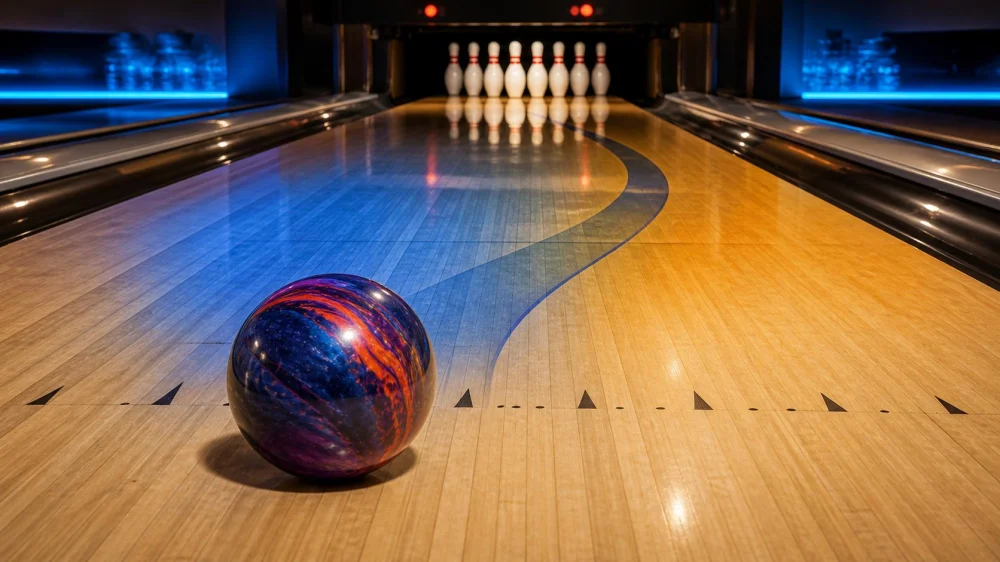
Bowling lane oil is both protection for the lane and a major influence on ball motion. A bowling ball does not simply roll over a uniformly dry surface. It travels through conditioner that varies in length and volume, then encounters more friction farther down the lane. As games continue, balls move conditioner and absorb some of it, so the reaction you saw in the first frame may not remain all evening.
You do not need a technical pattern sheet to begin reading a lane. Watch where your ball travels, when it changes direction, and how it enters the pins. Make one small adjustment at a time and compare the result. This observation-based approach is more useful than memorizing a fixed move, because bowlers use different speeds, rotations, equipment, and release angles.

Lucky Strike Green Brook
Green Brook TownshipSomerset CountyNew Jersey
380 US-22, Green Brook Township, NJ 08812, USA
Why bowling lanes have oil
Lane conditioner reduces wear and helps create a consistent playing surface. Modern bowling centers apply it with specialized machines according to a programmed pattern. The lane is not oiled all the way to the pins, and the conditioner is not necessarily distributed evenly from gutter to gutter. The combination of oil and dry boards shapes where a reactive ball skids, begins to hook, and rolls.
The center decides when lanes are cleaned and conditioned. A lane used after a league session may play differently from a freshly prepared lane, and two adjacent lanes can transition at different rates. Ask staff about general lane conditions if that information is available, but respect that a recreation session may not include a pattern sheet or competition-level maintenance schedule.
Blue Valley Lanes Inc
Wind GapNorthampton CountyPennsylvania
495 E Moorestown Rd, Wind Gap, PA 18091, USA
What an oil pattern does to the ball
In simplified terms, the ball tends to skid more where there is greater conditioner and find friction sooner where the surface is drier. After the skid phase, it changes direction and then rolls toward the pins. The exact shape depends on ball construction, surface condition, speed, axis rotation, rev rate, lane surface, and pattern. Two bowlers throwing from the same board may see very different motion.
A common recreational condition may provide more friction toward the outside and more hold toward the middle, giving casual bowlers some room for error. That description is not a guarantee for every center or every time of day. Rather than assuming the lane will guide the ball, use your warm-up shots to observe the actual response.
Straight bowlers are also affected by conditioner, even if the change is less dramatic. The ball can skid farther, deflect differently at the pins, or feel less controllable if speed varies. A consistent starting position, target, and tempo will make differences easier to notice.
Watch the ball from release to pins
Do not judge a shot only by the final pin count. Watch the ball cross your target, travel through the middle part of the lane, change direction, and enter the pocket. A strike can result from a fortunate pin collision even when the ball missed its intended path. Conversely, a well-executed shot can leave a pin. Lane reading improves when you separate execution from outcome.
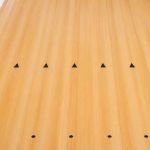
Choose one visual cue near the arrows and, if helpful, a second cue farther downlane. After the shot, ask three questions: Did the ball cross the intended target? Did it begin turning earlier or later than expected? Did it enter the pins high, light, or near the desired pocket? If you missed the target at release, repeat the shot before changing the lane strategy.
For a right-handed hook player, repeated high hits may indicate that the ball found friction too early or too strongly; repeated light hits may indicate excess skid or insufficient recovery. The interpretation reverses spatially for a left-handed player. These are starting observations, not diagnoses. Ball speed and release changes can produce similar results, so prioritize repeatable execution.
Make small, testable adjustments
Use a simple hierarchy. First confirm that your feet, target, and release were close to the plan. Then move in small increments. Many bowlers adjust their feet and target together to preserve a familiar launch angle. Others change only the target, speed, hand position, or ball. Changing several variables at once makes it hard to learn which choice worked.
If the ball hooks too early, a player might move toward a line with more oil, increase speed slightly while staying controlled, use less side rotation, or select equipment designed for a smoother or weaker response. If the ball skids too long, a player might find earlier friction, reduce speed modestly, or use a ball with a stronger appropriate reaction. Equipment advice should account for the bowler’s physical ability and the actual lane; a qualified coach or pro shop can help.
Keep adjustments comfortable. Do not force extra speed, wrist rotation, or loft in a way that causes pain or puts other bowlers at risk. A lower score is preferable to an injury. Stop if you feel sharp pain, dizziness, or loss of control.
Recognize lane transition
Every shot changes the condition slightly. Porous reactive balls can absorb conditioner, and ball tracks can carry small amounts farther downlane. When many players use a similar path, the front part of that path may develop more friction, while conditioner transported downlane can soften the ball’s later response. Bowlers often call these changes transition or breakdown.
Look for a pattern across several good shots. If the same release begins hitting higher, the ball may be reading the lane sooner. If it starts sliding past the expected breakpoint, carrydown or another change may be involved. Do not react to a single poor shot. Confirm the trend, make a small move, and observe again.
On a pair of lanes, one lane can transition differently because of traffic, machine application, lane surface, or player lines. Track each lane separately rather than assuming one adjustment applies to both. A short note—such as starting board, target, and result—can reveal the difference during league or tournament play.
House patterns and sport patterns
A typical house condition is designed to support enjoyable scoring for a broad range of customers. A sport condition generally provides a smaller margin for directional error and asks the bowler to control speed, target, and release more precisely. Pattern length and volume matter, but a pattern name alone does not tell you exactly how it will play after surface characteristics and traffic are considered.
When practicing on a challenging pattern, lower your scoring expectations and focus on repeatability and spare shooting. Ask whether a published pattern sheet applies to the current lane session. If it does, use it as context, not as a guaranteed ball-choice formula. Your ball motion remains the most direct evidence.
Equipment, surface, and maintenance
Bowling balls with different cover materials and surface textures interact with conditioner differently. A polished ball may preserve energy farther downlane in one situation, while a rougher surface may create earlier traction. Core design also affects motion. Avoid buying a ball solely because another bowler uses it successfully; fit, release, and typical conditions determine whether it suits you.
Keep personal equipment clean according to the manufacturer’s instructions and the center’s rules. Use approved products and a clean towel. Do not apply cleaners during play if competition rules prohibit it. A pro shop can inspect the surface, advise on maintenance intervals, and restore the ball within specifications.
House balls are intended for broad public use and may react more modestly. Choose one that fits comfortably and can be controlled without strain. Oil visible on the ball can be wiped with an approved towel when permitted. Never put hands or cloths into the ball return mechanism.
A simple lane-reading practice plan
Begin with a comfortable ball and line. For the first few shots, keep feet, target, and tempo consistent. Record where the ball crosses the arrows and how it enters the pins. Once you have a baseline, test one small move with your feet and target. Repeat enough shots to distinguish the lane response from normal execution variation.
Next, practice a spare line that minimizes hook, particularly for corner pins. Spare accuracy can stabilize scoring when the strike line changes. Finish by returning to the original strike line and noting whether it now reacts differently. This creates a simple demonstration of transition within one session.
Practice should have a limit. Take breaks, hydrate, and stop when fatigue makes your approach unsafe. Quality observations from a shorter session are more valuable than many uncontrolled shots.
Courtesy and safety around lane conditioner
Lane conditioner belongs on the lane, not the approach. Never step over the foul line to inspect oil or retrieve a ball. The lane surface can be extremely slippery, and entering it can cause a serious fall. If a ball stops, equipment fails, or a foreign substance appears on the approach, stop bowling and notify staff.
Keep food, drinks, and street shoes away from the approach. Moisture or debris on a bowling shoe can cause an unexpected stop or slide. Give neighboring bowlers space and follow local lane-courtesy rules while observing your shot. Reading oil is ultimately a process of safe, patient attention: watch the ball, confirm the trend, and make the smallest useful change.





 Sparta Pour House4.0 (18 reviews)
 The All Star4.0 (513 reviews)
 Better Off Bowling - New York3.0 (6 reviews)
 Finnigans Lanes3.0 (581 reviews)
 Thunderbird Lanes - Warminster4.0 (711 reviews)
 Coram Country Lanes4.0 (507 reviews)
 Why Some Bowlers Throw Too Hard | Southwestern Lanes
 Bowling Lane Arrows and Dots: A Beginner Targeting Guide
 How to Organize a Bowling Birthday Party at a Local Alley
 The Secret to Developing a Smooth and Powerful Bowling Approach
 Why Your Ball Needs Polishing Regularly
 Bowling Tips for Weekend Players Who Love the Game