

How League Bowling Beginners Can Compete Smarter and Improve Faster
- League-Bowling-Mindset-Basics - understanding pressure, rhythm, and consistency
- Core-Throwing-Technique - building repeatable bowling form from the start
- Scoring-Strategy-Insights - how spare shooting changes your average dramatically
- Real-League-Stories - beginner experiences and what actually improves scores
- Practice-Methods-That-Work - structured training used by experienced bowlers
Starting Out in League Bowling: Why Most Beginners Struggle at First
Joining a bowling league for the first time is exciting—but also a little intimidating. The lanes are louder, the pace is faster, and suddenly every frame feels like it matters more than casual games with friends. Many beginners quickly realize that raw power alone does not translate into high scores.
The truth is that league bowling is less about throwing hard and more about repeating the same controlled motion under pressure. This is where most newcomers struggle. Understanding basic bowling tips for beginners early can dramatically shorten the learning curve and help you compete more confidently.

Building a Reliable Bowling Foundation
1. Stance and Starting Position Matter More Than You Think
A stable stance sets the tone for every shot. Feet should be balanced, shoulders relaxed, and your body aligned toward your target arrow on the lane. Many beginners overlook this step and rely too much on arm strength.
One common issue in early league games is inconsistency caused by slightly different starting positions each frame. Even a small shift in foot placement can change ball trajectory significantly.
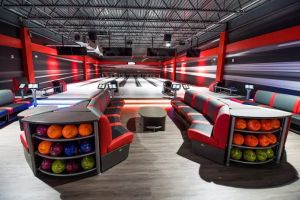
RPM Raceway
StamfordWestern Connecticut Planning RegionConnecticut
600 West Ave, Stamford, CT 06902, USA
2. Smooth Approach Instead of Speed
A controlled four-step or five-step approach is ideal for most beginners. The goal is rhythm, not rushing. When bowlers hurry, timing breaks down, and the ball release becomes unpredictable.
Experienced coaches often say: “If your feet are chaotic, your score will be chaotic.” This simple principle is one of the most important bowling form basics for league players.
3. Release Consistency Over Power
New bowlers often try to throw the ball as hard as possible. However, league scoring improves faster when release mechanics are consistent. A smooth release helps control hook potential and lane accuracy.
Understanding Lane Behavior in League Play
Oil Patterns and Why They Matter
Unlike casual bowling, league environments often use specific oil patterns. These patterns affect how much the ball hooks and where it transitions on the lane.
Beginners who ignore oil patterns often feel like their ball behaves differently every game. In reality, the lane conditions are changing how friction interacts with the ball.
Adjusting Your Target Instead of Your Power
A common mistake is changing throw strength instead of adjusting aim. A better strategy is to shift your target arrows or boards slightly left or right depending on ball reaction.
This adjustment mindset is one of the most important league bowling strategies for steady improvement.
Spare Shooting: The Real Secret to Higher Averages
Ask any experienced league bowler what separates average players from strong competitors, and most will say the same thing: spare conversion. Strikes are exciting, but spares build consistency.
Why Beginners Lose Easy Points
Many new bowlers focus heavily on strikes and underestimate spare practice. Missing easy single-pin spares can lower an average more than missing strikes entirely.
Simple Spare System That Works
A practical method is assigning a straight-line approach for spare shots, reducing hook and simplifying targeting. This eliminates unnecessary variables during critical frames.
Real League Story: The 120-Average Turnaround
A beginner bowler named Marcus joined a local league with an average score of around 120. At first, he struggled with consistency and often changed his throwing style mid-game.
After focusing on structured bowling consistency tips—keeping the same stance, slowing his approach, and practicing spare conversions—his average improved steadily over eight weeks.
By the end of the season, Marcus was consistently scoring above 160. His biggest breakthrough was not power, but repetition and discipline.
Stories like this are common in leagues everywhere, especially in community-focused bowling centers like Southwestern Lanes, where beginners often transition into confident competitive players with the right guidance.
Training Habits That Build Long-Term Improvement
Practice With Purpose, Not Just Repetition
Throwing dozens of balls without structure rarely leads to improvement. Instead, effective practice involves focusing on one skill per session—such as release accuracy or spare shooting.
Record and Adjust Your Performance
Many bowlers underestimate the value of tracking their games. Noting missed spares or inconsistent shots helps identify patterns that are not obvious during play.
Learn to Adapt Mid-Game
Lane conditions shift as games progress due to oil breakdown. Learning to adjust positioning instead of repeating the same shot is a key milestone in league development.
Building Confidence in Competitive Environments
League bowling is as much mental as it is physical. Beginners often feel pressure when others are watching or when scores are close. Managing this pressure is part of long-term success.
One effective approach is focusing only on the current frame rather than overall score. This keeps attention on execution instead of outcome anxiety.
Over time, this mindset builds confidence and improves consistency naturally.
Why Small Adjustments Create Big Score Improvements
Most improvement in bowling does not come from dramatic changes. Instead, it comes from small refinements:
A slightly more stable wrist position. A smoother release timing. A more consistent spare approach. Each adjustment alone may seem minor, but together they significantly increase scoring potential.
This is why experienced players often appear “effortless”—their system removes unnecessary variability.
Developing Your Own Competitive Style
As bowlers gain experience, they naturally develop personal styles. Some rely on controlled straight shots, while others prefer more hook-based approaches.
The key is not copying others, but understanding your own strengths. League bowling rewards repeatability more than creativity.
Once fundamentals are stable, experimenting with different lane strategies becomes more effective and enjoyable.






 Bowlero East Meadow4.0 (797 reviews)
 Tilted 104.0 (396 reviews)
 West Point FMWR Bowling Center4.0 (105 reviews)
 Bowlero Belleville4.0 (1958 reviews)
 Homefield Bowl4.0 (783 reviews)
 Larkfield Lanes4.0 (189 reviews)
 Tips for Bowling on Dry Lanes: How to Improve Your Game
 How to Find the Best Bowling Deals Near Me in the US
 Bowling Tips for Casual and Competitive Players: Improve Your Game Fast
 How to Practice Bowling at Home Without a Lane: Simple Training Tips
 How to Bowl a Spare Even When the Setup Looks Impossible
 How to Record Your Bowling Games for Self-Analysis