
How to Choose a House Bowling Ball That Fits
On this page
Quick answer
Start with a house ball whose thumb and finger holes feel snug but release smoothly. Then choose the heaviest weight you can swing in balance without gripping, dropping your shoulder, slowing unnaturally, or losing control. Bowl several easy shots before deciding. A common body-weight rule is only a starting estimate; hand fit, strength, mobility, technique, and fatigue matter more.
A house ball is a bowling-center ball made for shared public use, with several general-purpose hole sizes rather than a custom fit.

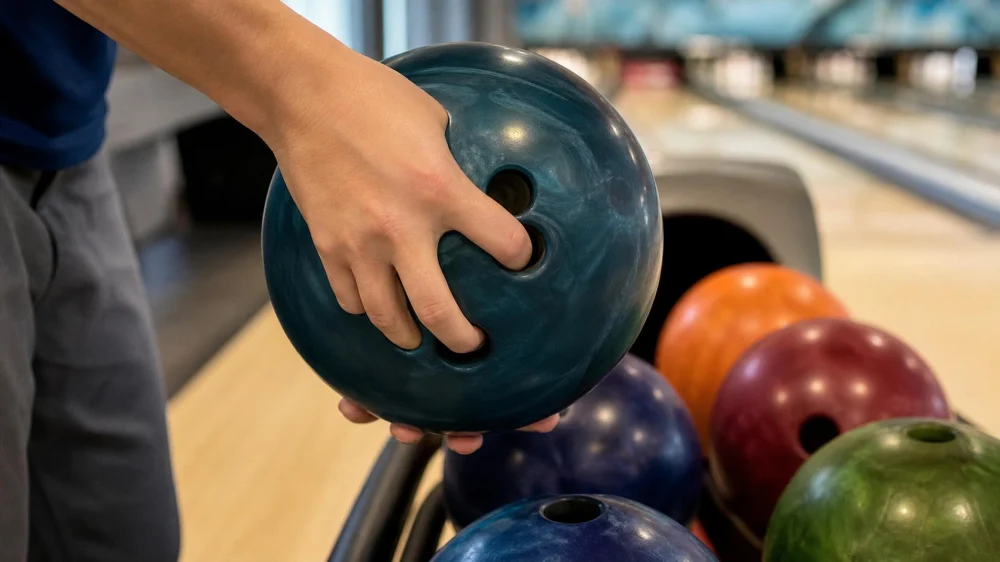
Choose fit before weight
- Place the thumb fully into its hole without forcing it.
- Insert the middle and ring fingers comfortably into their holes.
- Check that the holes do not pinch, scrape, or require a hard squeeze.
- Hold the ball at waist height over the rack and relax your grip.
- Make sure the ball does not stick to the hand or feel ready to fall immediately.
House-ball hole spacing is fixed, so the best weight may not have the best fit. Try several balls of the same weight and adjacent weights.

DiDonato Family Fun Center
HammontonAtlantic CountyNew Jersey
1151 S White Horse Pike, Hammonton, NJ 08037, USA
Use a controlled weight test
Stand with stable feet and support the ball with both hands before testing. Make a slow practice swing with the bowling arm while staying behind the foul line and clear of others. The ball should not pull your torso sideways or force your elbow and wrist to collapse.
United States Bowling Congress beginner guidance commonly uses roughly ten percent of body weight as an initial reference, then adjusts for size, strength, ability, and comfort. It is not a requirement and should never override pain or loss of balance.
Test it on the lane
- Begin with a shortened, smooth approach rather than maximum speed.
- Keep the swing relaxed and let the ball's weight create momentum.
- Notice whether you squeeze, loft the ball, stumble, or pull shots across the body.
- Evaluate control over several frames as fatigue develops.
- Switch down or seek staff help if release becomes unsafe.
Best choice: the ball that supports repeatable balance and a clean release. Not ideal: choosing the heaviest number simply for more pin impact.
Signs to switch balls
Stop using the ball if it causes sharp pain, numbness, tingling, skin pinching, a stuck thumb, repeated dropping, or loss of balance. A ball may also be too light if you muscle or steer it through the swing and cannot repeat the motion.
Ask bowling-center staff for help locating another fit. Do not alter a house ball, apply substances inside the holes, or use a visibly damaged ball.
When to consider your own ball
A custom-drilled beginner ball may improve comfort and consistency because a pro shop measures the span and hole sizes for your hand. This is useful for frequent bowlers, people who struggle to find a house fit, or anyone joining a league.
Plastic or polyester balls travel relatively straight and can help beginners focus on fundamentals. More responsive coverstocks are not automatically better while basic control is developing.
Limitations and safety notes
Children, older adults, and people with hand, wrist, elbow, shoulder, back, balance, or mobility concerns may need individualized coaching or medical guidance. Never test weight in a crowded approach area.
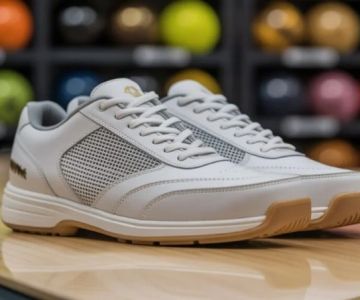
Wear correctly sized bowling shoes, keep food and liquids away from the approach, and wait until pins and the ball return are ready before bowling.
Frequently asked questions
What weight bowling ball should a beginner use?
There is no single correct number. Begin with a rough weight estimate, then prioritize comfortable fit, balance, clean release, and control over several frames.
Should the thumb hole feel loose?
It should allow a smooth release without pinching or sticking, but an overly loose fit can encourage squeezing. Try another house ball if uncertain.
Why does a custom ball feel lighter?
A secure fit can distribute effort and reduce squeezing, making the same scale weight easier to control.
Can children use the lightest ball available?
Only if it fits and they can handle it safely. Staff or a qualified coach should help choose an appropriate option.
Sources and evidence notes
This guide follows United States Bowling Congress beginner guidance emphasizing comfort, controllability, proper fit, and a weight that does not pull the bowler off balance. The body-weight percentage is presented only as an adjustable starting point.
Next steps
Try multiple hole fits, make a slow balance test, and bowl several controlled shots. Keep the ball that releases cleanly without squeezing or strain, and ask the center or pro shop for help when no house ball fits.




 Bowl 360 Astoria4.0 (1673 reviews)
 Garwood Lanes4.0 (388 reviews)
 Bowl-Rite Lanes4.0 (1382 reviews)
 Dave & Buster's Pelham Manor4.0 (5269 reviews)
 City Sports Grille4.0 (179 reviews)
 Dave & Buster's Wayne4.0 (5423 reviews)
 Top Rated Bowling Centers in Los Angeles with Affordable Deals and Entertainment | Southwestern Lanes
 Best Bowling Ball Layouts and What They Mean - Your Guide to Perfecting Your Game
 How to Bowl a Perfect Game: Expert Tips and Key Factors That Matter Most
 Bowling Tips for Casual Players Who Want Better Scores
 Best Bowling Techniques for Higher Scores and Better Control
 How to Aim in Bowling Using Arrows: Beginner Guide for Better Accuracy