

- 1. Understanding Hooking in Bowling
- 2. Why Your Ball Hooks Too Early
- 3. Techniques to Prevent Your Ball from Hooking Too Early
- 4. Choosing the Right Bowling Ball and Gear
- 5. Real-Life Example: Overcoming Early Hooking
1. Understanding Hooking in Bowling
Hooking the ball is a fundamental technique in bowling. A hook occurs when the ball curves as it travels down the lane. This curve creates a better angle for striking the pins, increasing the likelihood of a strike. However, for some bowlers, the ball hooks too early, causing it to veer off course and miss the pocket, resulting in poor pin action. Understanding the science behind the hook is key to mastering your throw and ensuring the ball behaves as intended.
2. Why Your Ball Hooks Too Early
When a bowling ball hooks too early, it can be a frustrating problem that affects your game. To improve your control and consistency, it's important to understand why this happens. Several factors contribute to an early hook:

2.1 Incorrect Release Technique
Your release plays a significant role in the ball's hook. If you release the ball with too much spin or an improper wrist angle, it may start to hook too early, before it even reaches the arrows on the lane. A common mistake is "forcing" the spin, which leads to an unpredictable curve.
2.2 High Ball Speed
Bowling with high speed can cause the ball to react too soon. A faster ball travels down the lane with less friction, which means it doesn’t have as much time to "set" before it hooks. This results in the ball curving too soon, often missing the intended path and target.
2.3 Oil Pattern and Lane Conditions
The oil pattern on the lane also influences the hook. If the lane is heavily oiled in the middle, the ball may slide longer before it hooks. On the other hand, a dry area on the outside of the lane will cause the ball to grip sooner, leading to an early hook. Understanding lane conditions is crucial for adapting your technique accordingly.
3. Techniques to Prevent Your Ball from Hooking Too Early
Now that you understand the causes of an early hook, let’s explore ways to control the ball’s motion and keep it from hooking too soon. These tips will help you adjust your approach and enhance your overall performance on the lane.
3.1 Adjust Your Release
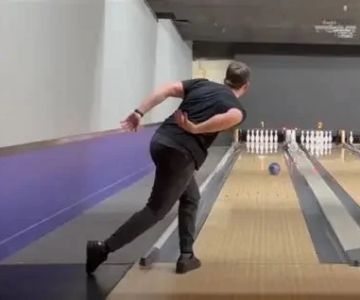
The key to controlling the hook lies in your release technique. To prevent the ball from hooking too early, try focusing on a smoother release with less spin. A relaxed wrist position and a controlled, consistent follow-through can reduce the early hook. Instead of "forcing" the spin, focus on letting the ball roll off your hand naturally, which helps create a more predictable trajectory.
3.2 Reduce Your Ball Speed
Slowing down your ball speed can help it react properly to the lane conditions. By reducing your speed, the ball will have more time to react to the oil pattern and hook at the right moment. Try focusing on a more controlled approach, ensuring that you’re generating enough force to maintain accuracy without overexerting speed.
3.3 Use the Right Angle
Experiment with your angles when releasing the ball. A higher angle or a more direct throw can prevent the ball from hooking too early. Try throwing the ball with a straighter path, targeting the pocket from a different angle. This change in approach can help you avoid an early curve and place the ball where it needs to be for a clean hit.
4. Choosing the Right Bowling Ball and Gear
The right equipment can make a significant difference in controlling your ball’s motion. Selecting the proper bowling ball, with the right coverstock and core design, can help you manage the hook better.
4.1 Choosing the Right Ball Weight
The weight of the ball is crucial for controlling its movement. A ball that is too heavy can be difficult to control, while a ball that is too light may not have enough momentum to maintain a consistent line. Finding the right weight for your throwing style will help you prevent the ball from reacting too early.
4.2 Proper Grip and Finger Position
Ensure that your grip and finger position are correct. A tight grip or improper finger placement can cause excessive spin and lead to an early hook. By focusing on a relaxed, comfortable grip, you can achieve better control over the ball's trajectory.
5. Real-Life Example: Overcoming Early Hooking
Take the story of Jack, a league bowler who struggled with his ball hooking too early, leading to inconsistent performances. Jack discovered that his ball speed was too high, and his wrist was too tight during release. By slowing down his speed and focusing on a smoother release, Jack was able to achieve a more controlled hook. As a result, he found more accuracy, increased his strike rate, and eventually improved his overall game. Jack's story is a great example of how small adjustments in technique can lead to big improvements in performance.
By applying the tips shared in this article, Jack was able to get his ball on a better line, reduce early hooks, and increase his control on the lanes, making his bowling experience much more enjoyable and successful.




 Howell Lanes4.0 (715 reviews)
 Laurel Duckpin Bowling Lanes4.0 (126 reviews)
 Urban Air Trampoline and Adventure Park4.0 (1046 reviews)
 Rockaway Lanes Inc4.0 (397 reviews)
 The Funplex4.0 (5148 reviews)
 Funfest Mill Basin Bowl3.0 (1249 reviews)
 Why Understanding Pin Action Helps Improve Your Bowling Scores
 How to Bowl More Strikes Without Changing Equipment: Expert Tips for Every Bowler
 Best Bowling Lanes Near Me with High Ratings, Good Reviews, and Affordable Prices
 Complete Bowling Guide with Tips, Equipment, Deals, and Best Bowling Alleys Near Me
 How to Bowl a Perfect Game: Expert Tips and Winning Strategies
 Top Bowling Centers Near Me with Food, Drinks, and Entertainment