
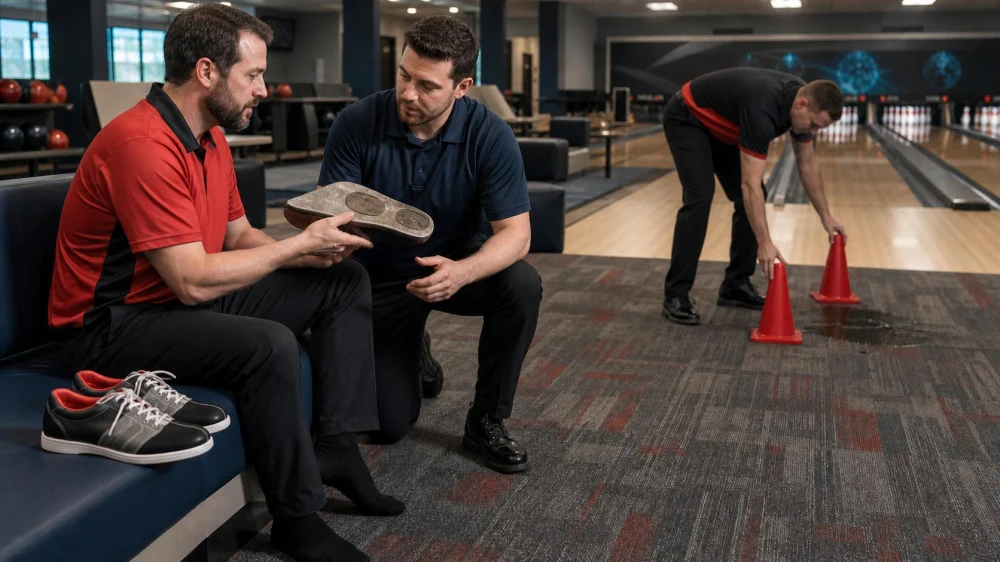
Wet Bowling Shoe Sole: Stop, Change Shoes, and Tell Staff
Bowling shoes are designed to slide and brake in a controlled way on a clean, dry approach. Water, soda, food, restroom moisture, parking-lot grit, or a damp sole can make one step stick or slip unexpectedly. Stop bowling, stay off the approach, alert staff, and replace or professionally clean and dry the shoe according to center policy. Do not test a wet sole with a full delivery.
Quick answer
Notice a damp, sticky, gritty, or uneven sole? Do not take another shot. Step away from active approaches without sliding the contaminated shoe across them. Tell teammates and staff, identify any spill, and request a rental-shoe exchange or approved service for interchangeable soles. Dry socks if needed and keep street shoes outside the bowling area. Resume only after staff clears the approach and the replacement footwear feels secure during a cautious stationary check.

Stop before the approach
Keep both feet on the carpeted seating area and avoid sudden movements. Tell the next bowler to wait. If you discover the problem mid-approach, stop the delivery only when you can do so without twisting or falling and stabilize yourself away from the foul line.
For a fall, severe pain, head impact, inability to bear weight, or suspected injury, do not continue. Alert staff and seek appropriate medical help. Preserve the area for an incident report.
Pinsetter Bar & Bowl
MerchantvilleCamden CountyNew Jersey
7111 Maple Ave, Merchantville, NJ 08109, USA
Identify the source
Look for a tipped cup, melting ice, wet restroom floor, entrance rain, food, lane oil tracked beyond the foul line, cleaning solution, or grit. Do not touch unknown liquid or smell a chemical. Keep others away and point out the location to staff.
Check both shoes from a seated position under good light. A tiny damp patch, gum, loose slide pad, curled edge, embedded pebble, or worn heel can change the release step. Avoid rubbing shoes together over the carpet or approach.
Tell staff
Give the lane number and exact location. Staff can block the area, use the approved cleanup method, inspect the approach, exchange rentals, or determine whether the lane should pause. Other bowlers should not mop, powder, spray, or scrape the surface themselves.
Do not apply talc, rosin, slide powder, soap, alcohol, or adhesive to the approach or shoe. Loose products can spread to another bowler’s path and may be prohibited by center or competition rules.
Exchange rental shoes
Bring damp rental shoes to the counter by the route staff indicates, carrying them if that avoids tracking moisture. Tell the attendant what contaminated them. Request another correctly sized pair and clean, dry socks when the center offers them.
Check heel, slide area, stitching, laces, interior, and fit before returning. Do not use a heater, hand dryer, or restroom paper to make a rental sole appear dry; staff needs to assess it.
Protect personal shoes
For shoes with interchangeable soles or heels, sit down, remove the shoe, and follow manufacturer instructions and alley rules. Replace a contaminated component only with the correct side, orientation, and secure attachment. Have pro-shop or staff help when uncertain.
Do not peel, sand, glue, heat, or wash a sole at the lane. Keep spare parts in a clean dry case and label left and right privately. A component that curls, separates, or will not attach flat should be removed from use.
Keep the approach clean
Food and drinks belong in designated areas behind the approach. Carry beverages in stable containers and never place them on the ball return or floor. Clean hands before handling the ball and shoes after eating.
Wear shoe covers when leaving for restrooms, entrances, patios, or other damp areas, or change into street shoes according to center policy. Remove the cover before stepping onto the approach; a cover itself is unsafe for delivery.
Return with a controlled check
Wait until staff confirms the approach is clean and dry. On the carpeted area, check that shoes fit and soles are flat. At the back of the approach, stand still and take one short controlled step without a ball, only if center policy permits.
Do not perform an exaggerated slide or intentionally test the foul-line area. Begin the next delivery at reduced speed, with balance as the priority. Stop again if either foot grabs, skids, or feels different.
Prevent repeat contamination
Keep shoe covers beside the seating exit, designate a stable drink location, wipe hands, and inspect soles after every trip away from the lane. During rain or snow, change footwear away from approaches and store wet outerwear where staff directs.
For leagues, carry approved spare slide soles, heels, laces, and a towel in a closed bag. Review event rules before using any maintenance product and report approach changes instead of silently adapting to a hazard.
Frequently asked questions
Can I dry the sole with a hand dryer?
No. Exchange rental shoes or follow the manufacturer and center’s approved service process.
Should I use powder to restore slide?
No. Powder can contaminate the approach and endanger other bowlers.
Can I bowl carefully in damp shoes?
No. Stop and replace or professionally service the footwear first.
What if the approach itself is wet?
Keep everyone off it and alert staff immediately.
Next steps
Before play, inspect shoes and identify safe drink and exit routes. If a sole becomes wet or dirty, stop, isolate the source, tell staff, exchange or service the shoe, and return only after the approach and footwear are cleared.



 Sparta Pour House4.0 (18 reviews)
 The All Star4.0 (513 reviews)
 Better Off Bowling - New York3.0 (6 reviews)
 Finnigans Lanes3.0 (581 reviews)
 Thunderbird Lanes - Warminster4.0 (711 reviews)
 Coram Country Lanes4.0 (507 reviews)
 Why Some Bowlers Throw Too Hard | Southwestern Lanes
 Bowling Lane Arrows and Dots: A Beginner Targeting Guide
 How to Organize a Bowling Birthday Party at a Local Alley
 The Secret to Developing a Smooth and Powerful Bowling Approach
 Why Your Ball Needs Polishing Regularly
 Bowling Tips for Weekend Players Who Love the Game