
Bowling Lane Change: Move Balls, Shoes, Scores, and Players in Order
On this page
Quick answer
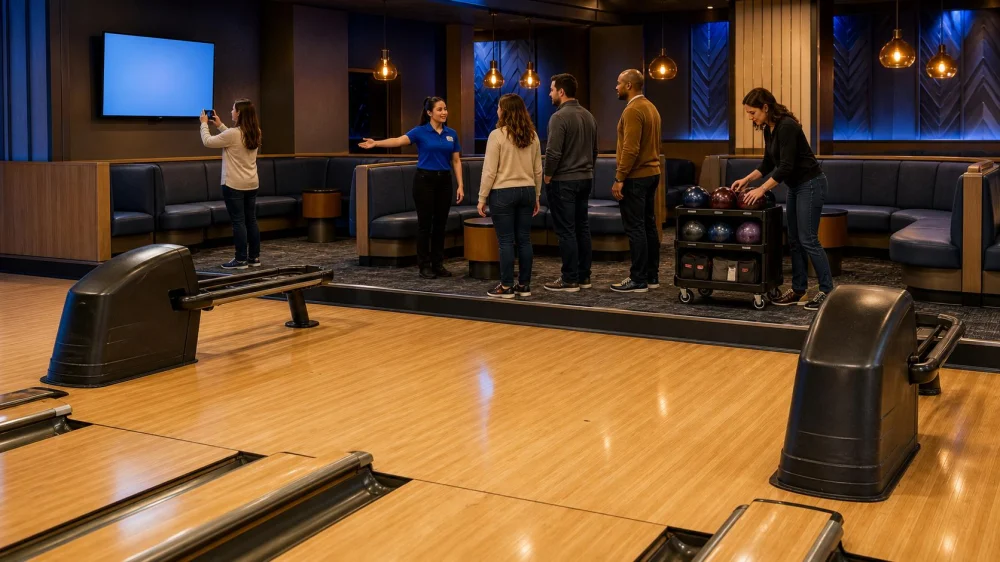
When staff moves your group to another bowling lane, stop play, confirm the destination lane and whether the score will transfer, count every personal and house ball, assign one person to check shoes and small items, and move through the seating area—not across approaches or lanes. Let staff handle any ball trapped in equipment.
At the new lane, verify player names, order, frame, delivery count, handicap or game format, and which balls belong on the rack before anyone bowls.
Pause and confirm the move
Ask why the move is happening and whether it is temporary or permanent. Confirm the new lane or pair, whether neighboring groups are also moving, how much time remains on timed play, and whether food, drinks, rental shoes, and open tabs follow automatically.
Take a photo of the scoring screen if the center permits it. Do not make manual score changes before staff transfers or records the game. Tell staff about league, tournament, bumper, ramp, accessibility, or automatic-scoring settings that must be preserved.

Move equipment without mix-ups
- Count personal balls and identify each by owner.
- Separate similar-looking balls before lifting them from the rack.
- Carry one manageable item at a time or use an approved ball cart.
- Keep finger holes pointed away from loose straps and other equipment.
- Move rental shoes, street shoes, bags, wrist supports, towels, and accessories.
- Ask staff to move food and drinks when facility policy requires it.
- Check seats, under tables, console shelves, and the original rack.
- Keep walkways and the new approach clear while unloading.
Do not roll a ball across the floor, balance multiple balls against the body, or place balls on chairs where they can fall.
Verify score and bowler order
Compare the new screen with the saved record. Check spelling only as needed, player order, current frame, first or second delivery, marks, pin count, handicap, team assignment, and game number. Report a mismatch before the next ball, because later throws can make correction harder.
If a scoring decision depends on league or tournament rules, call the official rather than changing it at the console. For casual play, staff should explain what the system can restore and how any incomplete frame will be handled.
Restart on the new lane
Observe the approach for sticky or slippery areas and tell staff before bowling. Check ball-return capacity and arrange balls without overcrowding. Reconfirm bumpers, ramp position, seating, and accessible path. Let adjacent bowlers know the group has moved and reestablish lane courtesy.
Lane conditions may feel different. Use a controlled first shot and observe ball motion rather than making a large immediate adjustment. Follow event rules about practice shots after a move. Confirm the clock, game count, and any compensation before the group settles in.
Lane-change checklist
- Destination and reason confirmed
- Old scoring screen recorded
- Personal and house balls counted separately
- Shoes, bags, aids, and small items collected
- Food, drinks, and tab ownership clarified
- Player order, frame, delivery, and handicap verified
- New approach and return inspected
- Accessibility settings restored
- Time, games, and compensation confirmed
Limitations
Scoring systems, event rules, lane-pair procedures, timed play, and compensation policies vary. This guide cannot authorize score correction or equipment handling. Follow center staff, league, and tournament officials.
FAQ
Who moves a trapped ball?
Trained alley staff. Do not enter a lane or ball-return system.
Can the score always transfer?
Not always automatically. Record the screen and let staff handle the system.
Should house balls move too?
Ask staff. Count and distinguish them from personal equipment.
Do we get practice shots?
That depends on center and event rules. Ask before throwing.
What if the new lane feels different?
Make small observation-based adjustments and report any unsafe approach condition.
Evidence notes
Useful evidence includes the original score photo, move time, old and new lanes, staff direction, personal-ball count, restored settings, corrected-score approval, remaining time or games, and compensation note. Keep attention on safe movement rather than documenting every step.
Conclusion
A lane move is easiest when the group treats it as a controlled handoff. Pause, record the game, count equipment, move through safe walkways, verify every scoring field, restore accessibility settings, and take a measured first shot on the new lane.





 Lakewood Lanes4.0 (680 reviews)
 The Bowling Store - Milford, CT4.0 (41 reviews)
 Little Kings & Queens Fun Place4.0 (251 reviews)
 Penndel Bowling Center4.0 (547 reviews)
 Long Island Usbc4.0 (4 reviews)
 Pike Lanes Bowling Inc4.0 (236 reviews)
 Tips for Bowling on Dry Lanes: How to Improve Your Game
 Cheap Bowling Nights Near Me: Best Deals and Discounts Guide
 How to Find Bowling Deals Near Me for Groups and Parties
 How to Track Your Bowling Progress and Improve Over Time
 Why Your Bowling Ball Hooks Differently as Lanes Change
 How to Bowl Consistently Under Pressure