
How to Curve a Bowling Ball Without Losing Control
- 1. Understanding the Curve in Bowling
- 2. Key Techniques to Curve a Bowling Ball
- 3. Tips for Maintaining Control While Curving the Ball
- 4. How to Practice Your Curving Technique
- 5. Choosing the Right Ball for Curving
1. Understanding the Curve in Bowling
Curving a bowling ball, also known as hooking the ball, is one of the most effective ways to improve your game. A curve allows the ball to change direction in the air, making it more likely to hit the pocket at an angle that increases your chances of a strike. But how does it work?
When you apply side spin to the ball, it curves due to the friction between the ball and the lane. The right amount of spin and the correct angle of approach will give you control over the ball’s movement and increase its accuracy.

2. Key Techniques to Curve a Bowling Ball
1. Grip and Finger Positioning
The key to curving the ball lies in your grip. Most bowlers use a fingertip grip, where the middle and ring fingers are inserted into the ball’s finger holes to the second joint, while the thumb is fully inserted. This grip allows for more control and spin.
Make sure to keep your hand relaxed, allowing your fingers to impart spin as you release the ball. The thumb should exit the ball smoothly, followed by the fingers which should create a side spin on the ball.

2. Arm Swing and Release
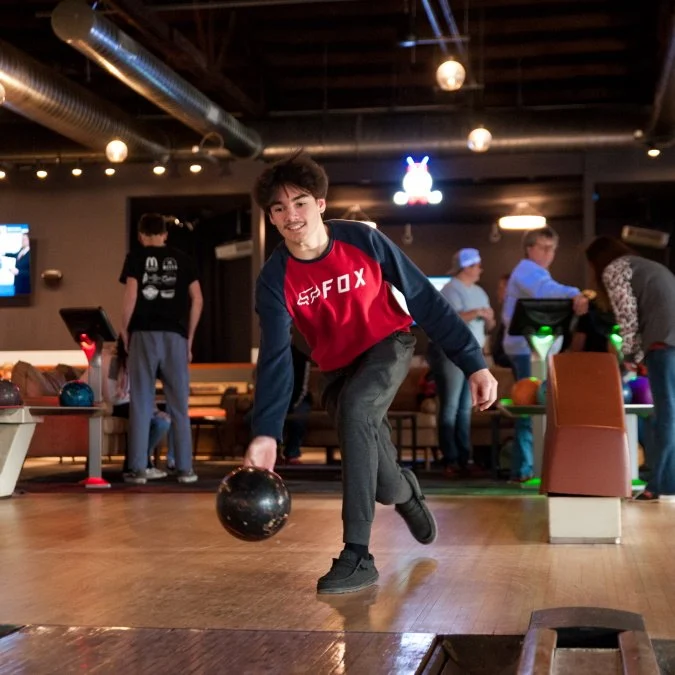
Your arm swing plays an important role in curving the ball. The swing should be straight and smooth, moving back and forward in a straight line. To create spin, release the ball with your fingers coming around the side, which generates the necessary hook.
It’s important to practice the timing of your release. Too much spin can lead to a loss of control, while too little spin will reduce the curve. A controlled release is key to achieving a consistent hook.
3. Proper Body Positioning
Your body position when you approach the lane can affect the direction and angle of the curve. Align your body in a way that your arm swing follows a natural, straight path. A common technique is to aim your body slightly to the left or right (depending on your handedness) to allow the ball to curve naturally toward the pocket.
3. Tips for Maintaining Control While Curving the Ball
While learning how to curve a bowling ball is exciting, maintaining control is crucial to avoid losing accuracy. Here are some tips to help you maintain control:
1. Start with Small Curves
When starting to curve the ball, avoid trying to force a sharp hook. Instead, begin with small, gradual curves and focus on accuracy first. Gradually increase the amount of spin as you gain confidence and control.
2. Focus on Consistency
Consistency is key to curving the ball effectively. Ensure that your grip, stance, and release are the same each time you bowl. Repetition helps you control the curve and maintain its trajectory, making your shots more predictable.
3. Watch Your Speed
The speed at which you throw the ball affects its curve. A faster ball may curve less, while a slower ball will hook more. Finding the right balance between speed and spin is important to achieving the perfect curve without losing control.
4. How to Practice Your Curving Technique
Like any skill, practice is essential for improving your curve and control. Here’s how you can practice effectively:
1. Focus on Your Release
Practice the release over and over, focusing on how your fingers are applied to the ball. Record yourself bowling to check the consistency of your spin and see if the release looks smooth.
2. Practice Different Angles
Experiment with different angles of release to see how the ball reacts. Try altering your body position and the angle at which you release the ball to observe how it changes the curve. The more you practice, the better you’ll understand how to control the ball’s movement.
3. Use Targets
Set up small targets on the lane to aim for. These targets will help you focus your attention on where you want the ball to curve and hit, improving both accuracy and curve control.
5. Choosing the Right Ball for Curving
Choosing the right bowling ball can make a significant difference in how well you can curve the ball. Here are some factors to consider:
1. Weight
Heavier balls tend to give more control over the curve, but they may be more challenging to handle. Lighter balls offer less spin but can be easier to control for beginners. Find a ball weight that’s comfortable for your strength and technique.
2. Coverstock and Core Design
The coverstock (the material that coats the ball) and the core design (the internal weight distribution) also influence the hook. Reactive resin coverstocks, for example, offer more traction on the lane, making them ideal for curving. Balls with symmetric cores tend to hook evenly, while asymmetric cores provide more angular hooks.
If you’re looking for the best bowling gear, consider exploring options at Southwestern Lanes for high-quality bowling balls and accessories tailored to your needs.



 Bowlero Milford4.0 (1430 reviews)
 Fort Hamilton Bowling Center4.0 (201 reviews)
 Cove Bowling and Entertainment4.0 (251 reviews)
 Round1 Bowling & Arcade Fashion District Philadelphia3.0 (1128 reviews)
 Nationwide Bowling Inc3.0 (26 reviews)
 Round1 Bowling & Arcade Holyoke Mall4.0 (1516 reviews)
 Best Bowling Alleys in Chandler for Families and Beginners
 Why Ball Span Is Important for Comfort: Understanding the Key Factors
 Why More Women Are Joining Bowling Leagues: A Growing Trend in the US
 Bowling Tips for Beginners: How to Practice Effectively
 Why Some Bowlers Throw Too Hard | Southwestern Lanes
 Cheap Bowling Near Me in Jacksonville with Deals and Discounts Guide